
Desserts
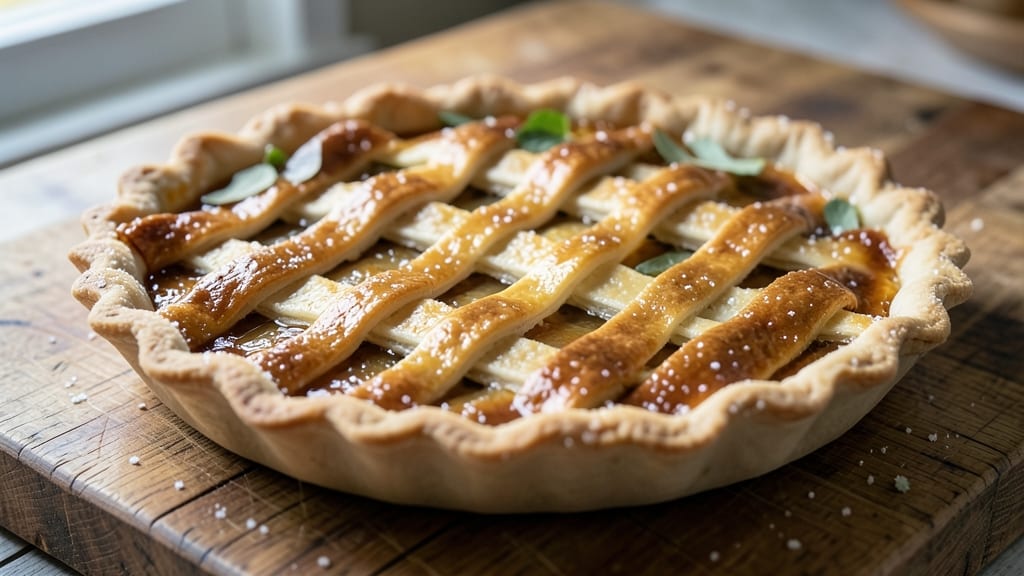
A 9-inch pie crust with shortening delivers the kind of flaky, golden perfection that transforms any filling into a showstopper. 🔥 The secret lies in cold butter and precise technique—no shortcuts, just layers of buttery crispness that hold up to both sweet and savory applications.
This recipe has become my go-to for everything from classic apple pies to elegant quiches, and it never fails to impress.
What sets this crust apart is the use of shortening alongside butter, which creates an extra-crisp lattice while maintaining tender layers. The dough comes together in just 10 minutes, then rests in the fridge for easy rolling and handling.
Whether you're blind-baking for a custard pie or using it as-is for a fruit filling, the result is consistently flaky, crisp, and professional-looking every time.
The process is straightforward but requires patience—chilling the dough at each step ensures clean layers and prevents shrinking. Once baked, this crust holds its shape beautifully, making it ideal for lattice designs or classic rolled edges.
Store leftovers in the freezer for up to 3 months, ready to pull out whenever inspiration (or dessert cravings) strikes.
Perfect for beginners and seasoned bakers alike, this recipe delivers restaurant-quality results with minimal effort. Let’s get started on creating the foundation for your next masterpiece.
Ingredients for 9 inch pie crust recipe with shortening
Seven essential ingredients for a restaurant-quality pie crust with perfect flakiness and golden lattice.
| Ingredient | Amount | Notes |
|---|---|---|
| All-Purpose Flour 🌾 | 2 ½ cups | Sifted for even texture |
| Unsalted Butter 🧈 | ¾ cup | Cold, cubed into 1/2-inch pieces |
| Shortening (Vegetable or All-Purpose) 🧈 | ½ cup | Cold, solid form preferred |
| Ice Water 💧 | ¼ cup | Chilled, for precise hydration |
| Diamond Crystal Kosher Salt 🧂 | ½ tsp | Fine grain preferred |
| Granulated Sugar 🍚 | 1 tbsp | For subtle sweetness balance |
| White Vinegar 🍶 | 1 tbsp | Enhances gluten development |
The butter-to-shortening ratio is non-negotiable for this recipe. Kroger's unsalted butter works perfectly, but any brand will do as long as it's cold and cubed evenly—no melting before mixing. Shortening like Crisco or Store Brand vegetable shortening is ideal; avoid partially hydrogenated oils. For flour, King Arthur All-Purpose is my go-to, but any high-protein flour (11-12% protein) ensures proper structure. The ice water must be chilled—room temperature water disrupts the delicate fat layers. If your kitchen is warm, add ice cubes directly to the mixing bowl.
No ice water? Freeze your measuring cup for 10 minutes to chill the water. Shortening unavailable? Lard or coconut oil can substitute at a 1:1 ratio, though texture will differ slightly. Using baking flour instead of all-purpose? Reduce the sugar to 1 tsp—baking flour already contains leavening. For a savory crust, omit the sugar entirely and increase salt to 1 tsp. The vinegar is crucial for gluten development; apple cider vinegar works equally well. If you're blind-baking, pre-bake at 375°F for 15 minutes before adding fillings to prevent sogginess.
This dough must rest at least 2 hours in the fridge before rolling—no rushing. Wrap tightly in plastic wrap and press directly against the dough to prevent air gaps. For lattice designs, chill the rolled-out crust for 30 minutes before cutting strips to maintain shape. Leftovers can be frozen for up to 3 months—wrap individual crusts in parchment and store in a sealed bag. Thaw overnight in the fridge before use. Never thaw at room temperature—condensation ruins the flakiness.
Why You'll Love This Recipe
- Here’s what sold me: the butter gives rich flavor, while the shortening adds that signature flakiness. No one ingredient overpowers—it’s a perfect marriage. I’ve made this for apple, pumpkin, and even savory galettes, and every time, the crust steals the show.
- I’ll be real: this recipe uses pantry staples, and the shortening stretches farther than butter alone. A 9-inch crust costs me pennies, and the leftovers? Perfect for mini hand pies or breakfast tarts. Budget-friendly doesn’t mean boring—this is ridiculously good.
Step-by-step instructions for 9-Inch pie crust with shortening
Here's the professional method for achieving that legendary flakiness—every layer matters.
👨🍳 Step 1: Combine Dry Ingredients Precisely
In a large bowl, whisk together the 2.5 cups All-Purpose Flour, 0.5 tsp Diamond Crystal Kosher Salt, 1 tbsp Granulated Sugar, and 1 tbsp White Vinegar. I sift the flour first for an even texture—this prevents lumps later. The vinegar might seem odd, but it enhances gluten development without adding flavor, creating a more tender crust.
Use a whisk for 30 seconds to distribute the salt and sugar evenly. The sugar adds subtle sweetness that balances savory fillings, while the vinegar helps create that signature flakiness. Keep the bowl on your counter—we'll work quickly to maintain cold temperatures.
🍳 Step 2: Cut in Cold Fat for Maximum Flakiness
Add the 0.75 cup Unsalted Butter (cubed into ½-inch pieces) and 0.5 cup Shortening to the flour mixture. The shortening is key here—it has a higher melting point than butter, creating those signature flaky layers. Cut the fat into the flour using a pastry cutter or two knives until the mixture resembles coarse crumbs with pea-sized butter pieces.
Work quickly but thoroughly—you want no flour streaks larger than ¼ inch. The butter should still be cold to the touch, not softened. If it melts, chill the mixture for 10 minutes before proceeding. This step is where the magic happens: proper fat distribution equals perfect flakiness.
⏰ Step 3: Add Ice Water Gradually
Add the 0.25 cup Ice Water, 1 tablespoon at a time, using a fork to gently mix after each addition. The water should be ice cold—this prevents gluten development while hydrating the dough just enough to hold together. Stop mixing as soon as the dough comes together when pressed; overworking develops gluten and makes the crust tough.
Form the dough into a loose ball and divide it into two equal portions. Wrap each portion in plastic wrap and refrigerate for at least 1 hour (up to 2 days). This resting period relaxes the gluten and allows the flour to fully hydrate, resulting in a more tender crust. Don't skip this step—it's non-negotiable for professional results.
🥘 Step 4: Roll and Fit the Crust Perfectly
On a lightly floured surface, roll one dough portion into a 9-inch circle, about ⅛-inch thick. I use a rolling pin with guides to maintain even thickness. Gently transfer the rolled crust to a 9-inch pie dish, letting it drape slightly over the edges. Press it into the bottom and up the sides, creating a ¼-inch overhang for crimping later.
Chill the fitted crust for 20 minutes while you prepare the second portion. This prevents shrinking when you add your filling. For lattice crusts, roll the second portion into a ⅛-inch thick rectangle and cut ½-inch strips using a sharp knife or pizza cutter. The strips should be 3-4 inches long—long enough to create a stable lattice pattern.
🔥 Step 5: Blind-Bake for Structural Support
Preheat your oven to 375°F. Line the fitted bottom crust with parchment paper, fill it with pie weights or dried beans, and bake for 15 minutes. Remove the weights and bake for another 5-7 minutes until the edges are light golden brown. This pre-baking creates a sturdy base that won't sog when you add your filling.
For lattice crusts, arrange the strips in a herringbone pattern over the pre-baked bottom crust. Brush the lattice and edges with egg wash (1 egg beaten with 1 tablespoon water) for a golden finish. Bake for 12-15 minutes until the lattice is golden brown and the crust is fully set. The result? A perfectly flaky, professional-quality pie crust that holds its shape under any filling.
Pro Tips For Making 9 Inch Pie Crust Recipe With Shortening
- CHILL THE FAT FIRST: Cut the butter and shortening together into tiny pea-sized pieces—no bigger—and pop them in the freezer for 10 minutes before mixing with flour. I learned this the hard way when my crust turned out greasy and tough; cold fat behaves better and distributes evenly.
- WEIGH YOUR FLOUR: Use a kitchen scale for the flour—no guessing with scooping. Shortening-based crusts need precise ratios, and even a cup’s worth of air in scooped flour can make your crust dry or crumbly. (Yes, even if you’re impatient like me.)
- WORK FAST AFTER WATER: Once you add ice water, stop messing with the dough—no kneading, no poking. The moment it comes together, press it into the pan and chill immediately. Overworking it after hydration turns the texture gummy, and nobody wants a pie crust that fights back.
- PATCH WITH PRACTICE: If your crust cracks during baking, don’t panic—just patch it with a bit of cold butter and flour (1:2 ratio) pressed over the tear. It’s not pretty, but it works, and your filling will hide it anyway. (Your future self will thank you for skipping the stress.)
Perfect pairings for this 9 inch pie crust recipe with shortening
Sweet Fillings
This crust shines with classic apple pie—toss 6 cups peeled, sliced apples with ¼ cup granulated sugar, 1 tbsp lemon juice, and 1 tsp cinnamon. The lattice design lets steam escape while keeping the filling tender.
For peach galette, use 4 ripe peaches sliced and arranged over a single crust with 2 tbsp brown sugar and 1 tsp vanilla. 🍐
Savory Applications
Transform this crust into a savory quiche by brushing the pre-baked bottom with 2 tbsp olive oil, then adding a layer of crispy bacon and shredded Gruyère cheese.
Top with 4 eggs beaten with ½ cup heavy cream, ½ cup diced ham, and ¼ cup chopped chives. Bake at 375°F for 30-35 minutes until set.
For spinach and ricotta, mix 10 oz thawed spinach with 1 cup ricotta, 1 egg, and ½ cup grated Parmesan.
Beverage Pairings
A chilled glass of sparkling apple cider (like Martinelli’s) complements sweet pies perfectly—its effervescence cuts through the richness. For savory quiches, a dry Riesling or crisp Sauvignon Blanc highlights the cheese and herbs.
I love pairing peach galettes with iced hibiscus tea for a refreshing contrast. Avoid heavy wines like Cabernet Sauvignon—they overpower delicate flavors. 🍷
Seasonal Variations
For fall, add ½ tsp pumpkin pie spice to the crust’s sugar and fill with roasted butternut squash and maple-glazed pecans.
In summer, try a key lime pie—replace the sugar with ½ cup lime zest and fill with 2 cups sweetened condensed milk and ½ cup fresh lime juice. Winter calls for pecan pie with a lattice top, while spring lends itself to strawberry-rhubarb combinations. 🍂
Garnish Ideas
Before baking, brush the crust edges with egg wash and sprinkle with coarse sugar for a caramelized finish. For sweet pies, add toasted sliced almonds or crushed graham crackers to the lattice strips.
Savory quiches benefit from a sprinkle of fresh thyme or smoked paprika before baking. A dusting of powdered sugar** on cooled pies adds a professional touch. 🌟
Nutrition facts
Frequently asked questions
Why use shortening instead of all butter in this pie crust?
Shortening creates extra flakiness because it has a higher melting point than butter. The butter adds flavor while the shortening makes those signature crisp layers. This combo prevents the crust from becoming too tender when baked. For extra crispness, use ½ cup shortening and ½ cup butter instead of the full amount of butter.
Can I make this crust without a food processor?
Use two knives or a pastry cutter to cut the cold butter and shortening into the flour until you get pea-sized pieces. Work quickly to keep everything cold—this maintains the flaky texture. If the mixture gets too warm, chill it for 10 minutes before proceeding.
How do I fix a cracked or shrinking crust?
Cracks usually happen when the dough isn't chilled enough. To prevent this, always refrigerate the dough for at least 1 hour before rolling. If it cracks while baking, brush the cracks with egg wash and bake for 2-3 extra minutes—the egg will help seal them. For shrinking, ensure your rolling pin is ⅛-inch thick and don't overhandle the dough.
Can I use this crust for a deep-dish pie?
This recipe is designed for a 9-inch single crust, not deep-dish. For a deeper pie, double the recipe and use a 10-inch pie dish. The dough will need extra chilling time (2 hours) to handle the thicker shape. For lattice designs, stick to single crusts—they're easier to work with and create a more elegant look.
How long can I keep leftover crust in the freezer?
Wrap individual crusts tightly in plastic wrap and store them in a sealed freezer bag for up to 3 months. Thaw overnight in the fridge before using. Never thaw at room temperature—condensation ruins the flakiness. For best results, bake from frozen (add 2-3 extra minutes to baking time).