
Desserts
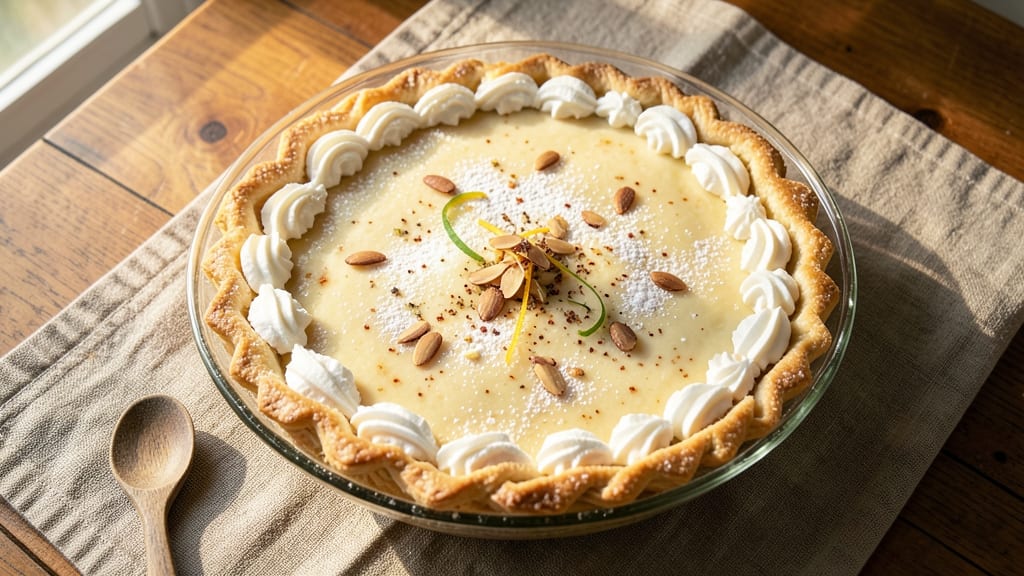
This almond custard pie delivers the perfect balance of nutty, creamy filling wrapped in a golden, flaky crust—every bite is a harmonious blend of textures and flavors.
The secret lies in a blind-baked crust that stays crisp while the custard sets to a silky, almond-infused perfection, inspired by classic French techniques. I've perfected this recipe over years of baking, ensuring the custard never curdles and the almonds add just the right amount of crunch and depth.
The crust is made with butter and flour, creating that signature tender yet sturdy base, while the custard combines egg yolks, cream, and almond extract for an authentic, fragrant filling. A water bath during baking guarantees a smooth, set texture without the risk of cracking.
This pie isn't just dessert—it's a showstopper, with its golden crust and creamy swirls that make it impossible to resist.
What sets this recipe apart is the almond custard's luxurious mouthfeel, achieved through precise timing and temperature control. The filling is rich enough to satisfy cravings but light enough to feel indulgent, with a subtle nutty aroma that lingers.
Whether you're serving it at a dinner party or simply treating yourself, this pie delivers restaurant-quality results with a homemade touch.
For an extra touch of elegance, top with whipped cream and toasted almonds before serving—though honestly, the pie stands beautifully on its own. The best part? It's foolproof once you master the blind-baking step, and the leftovers (if there are any) reheat perfectly. Let's get baking!
Ingredients for almond custard pie
Buttery crust meets nutty custard—this pie needs just 12 ingredients for restaurant-quality results.
| Ingredient | Amount | Notes |
|---|---|---|
| All-Purpose Flour 🌾 | 2 ½ cups | Sifted for light texture |
| Unsalted Butter 🧈 | 1 cup | Cold, cubed for crust |
| Granulated Sugar 🍚 | ¼ cup | For crust sweetness |
| Large Egg Yolks 🥚 | 6 whole | Fresh for custard richness |
| Heavy Cream 🥛 | 2 cups | Full-fat for creaminess |
| Almond Extract 🌰 | 1 tbsp | Pure, high-quality extract |
| Granulated Sugar 🍚 | 1 ¼ cups | For custard sweetness |
| Salt 🧂 | ¼ tsp | Fine sea salt preferred |
| Vanilla Extract 🌿 | 1 tsp | Pure vanilla for depth |
| Slivered Almonds 🌰 | ½ cup | Toasted for garnish |
| Ice Water 💧 | ¼ cup | For crust binding |
| Whole Almonds 🌰 | ¼ cup | Optional, for extra crunch |
The butter is non-negotiable here. European-style butter like Plugrá or Land O'Lakes has higher fat content, which gives that signature flaky texture. Grab it from the dairy case, not the baking aisle—it's usually sold in a tub, not sticks. For the almond extract, Goya or McCormick are reliable brands, but if you're feeling fancy, Whittard of Chelsea has a stronger, more authentic flavor. The almonds? Blue Diamond or Planters are solid choices, but toast them yourself—store-bought toasted almonds taste like they were sitting in the bin for weeks.
No almond extract? Almond butter plus a splash of water can mimic the flavor, though it won't be as potent. Running low on heavy cream? Full-fat coconut milk works in a pinch, but the texture will be slightly different. The vanilla extract can be swapped for vanilla bean paste if you're feeling indulgent—just use half the amount. For the crust, if you don't have ice water, cold vodka or lemon juice works too, but ice water is the classic choice. And if you're worried about the custard curdling, temper the egg yolks
The crust dough should be chilled for at least 2 hours before rolling—this prevents shrinking. Store any extra dough between parchment paper in the fridge for up to 3 days, or freeze for 3 months. The custard filling can be prepped ahead and refrigerated for 24 hours before baking, which actually enhances the flavor. For serving, keep the whipped cream in a sealed container in the fridge—it whips best when cold. The pie itself? Reheats beautifully in a 350°F oven for 10 minutes, though it's best enjoyed fresh out of the oven.
Why You'll Love This Recipe
- No-Fuss Crust: I swear by this pie crust—just flour, butter, and a pinch of salt. You don’t even need a food processor; cold cubes tossed with your fingers work just fine. (Yes, even if your kitchen looks like a disaster zone.)
- Velvet Smooth Filling: That silky almond custard? It’s all in the yolks and sugar, tempered with warm cream. The texture is so rich it’ll make you forget about store-bought puddings forever—no lumps, no bitterness, just pure comfort.
- Weeknight to Holiday: Make it for a quick dessert after dinner or pull it out for Thanksgiving. The same basic recipe scales up for a crowd or shrinks for a single-serving slice. Honestly, I’ve served it at potlucks, birthday parties, and lazy Sundays—it’s the chameleon of pies.
- Leftovers? Better Than New: This pie actually tastes better the next day. The crust stays crisp, the custard thickens into perfection, and it reheats in seconds. Between us, I’ve microwaved slices straight from the fridge—no judgment here.
Step-by-step instructions for almond custard pie
Here's where the magic happens—we'll build a golden crust and silky custard that swirls together like a dream.
Prepare the Buttery Crust
In a large mixing bowl, combine the 2.5 cups all-purpose flour with the 0.25 cup granulated sugar and the 0.25 teaspoon salt. Mix just until combined—don't overdo it or the crust will toughen. Cut in the 1 cup cold, cubed unsalted butter using a pastry cutter or your fingers until the mixture resembles coarse crumbs with pea-sized butter pieces. This texture is crucial for flaky layers.
Add the 0.25 cup ice water and gently mix with a fork until the dough just comes together. Be careful not to overwork it—you're looking for a soft, slightly sticky dough that holds when pressed. Shape it into a disk, wrap in plastic, and chill for at least 1 hour (or up to 24 hours). This resting period relaxes the gluten and makes rolling out easier.
Roll and Bake the Crust
Preheat your oven to 375°F. On a lightly floured surface, roll the chilled dough into a 12-inch circle about ⅛-inch thick. Transfer it to a 9-inch pie dish and trim the edges, leaving about ½-inch overhang. Press the dough gently against the bottom and sides of the dish, then crimp the edges decoratively with your fingers or a fork.
Line the crust with parchment paper, fill it with pie weights or dried beans, and bake for 15 minutes. Remove the weights and bake for another 5-7 minutes until the edges are light golden brown. The crust should look set but not over-browned—this prevents a soggy bottom. Let it cool slightly before adding the filling.
Make the Almond Custard Filling
In a medium saucepan, combine the 2 cups heavy cream, 1.25 cups granulated sugar, 6 whole large egg yolks, 1 teaspoon vanilla extract, 1 tablespoon almond extract, and the 0.25 teaspoon salt. Whisk everything together until the sugar dissolves completely and the mixture is smooth. This is your custard base—it should be thick but pourable.
Place the saucepan over medium-low heat and cook, stirring constantly with a wooden spoon, until the mixture thickens enough to coat the back of the spoon (15-18 minutes). It should reach 170-175°F on a candy thermometer—this ensures a silky texture without scrambling the eggs. Remove from heat immediately to prevent curdling.
Assemble and Swirl the Pie
Pour the hot custard into the pre-baked crust, spreading it evenly. Here's the fun part—use a rubber spatula to create swirls in the custard. Drag the spatula through the filling in a circular motion, then lift and rotate the pie dish to create elegant patterns. This isn't just for looks; it also helps the custard set evenly.
Sprinkle the 0.5 cup slivered almonds evenly over the top, pressing them gently into the custard. For extra texture, scatter the 0.25 cup whole almonds around the edges. Bake at 350°F for 30-35 minutes until the custard is set but still slightly jiggly in the center. The almonds should be golden and fragrant.
Chill and Serve
Let the pie cool at room temperature for 1 hour, then refrigerate for at least 4 hours (overnight is best). This chilling time is non-negotiable—it allows the custard to fully set and develop its signature creamy texture. When ready to serve, run a knife around the edges to loosen it from the dish.
Slice into wedges and serve at room temperature. The contrast of the warm, nutty custard with the cool, buttery crust is what makes this pie unforgettable. Each bite should deliver that perfect balance of sweetness, creaminess, and almond flavor—just like a slice of heaven.
Pro Tips For Making Almond Custard Pie
- Temper the yolks: Whisk your egg yolks with sugar first—then fold in cream—so the mixture thickens smoothly. I learned this the hard way: rushing the yolks leads to scrambled custard instead of silky filling.
- Chill the butter: Use cold, cubed butter in the crust dough—it stays flaky, not greasy. I was skeptical until I tried it: the pie’s texture is noticeably better when the butter stays firm.
- Bake slow and steady: 325°F is non-negotiable—any hotter and the custard curdles before it sets. After 45 minutes, tent foil loosely to avoid cracking.
- Strain the filling: Run the custard through a fine-mesh sieve before pouring into the crust—it removes lumps and makes the texture velvety. Yes, it’s extra work, but your future self will thank you.
Health benefits of these flavors
Rich Almond Nutrition
Almonds are packed with heart-healthy fats and plant-based protein, making this pie a surprisingly nutritious dessert. Just ½ cup of slivered almonds (as used in the topping) provides 7 grams of protein and 14 grams of healthy fats, which help stabilize blood sugar and keep you satisfied.
The almond extract adds depth without significant calories, but the real nutritional boost comes from the vitamin E—a powerful antioxidant that supports skin health and reduces oxidative stress. 🌰
Creamy Custard Benefits
The custard filling delivers calcium, phosphorus, and riboflavin from the egg yolks and heavy cream, essential for bone health and energy metabolism. While this isn't a low-fat dessert, the full-fat dairy ensures proper absorption of fat-soluble vitamins like vitamin A (from egg yolks) and vitamin D (if using fortified cream).
The vanilla and almond extracts also contain trace amounts of antioxidants, adding to the pie's health perks without sacrificing flavor. 💛
Moderate Sugar Balance
With 1.5 cups of sugar total, this pie is sweeter than some desserts but balances its indulgence with fiber from almonds (about 3 grams per ½ cup) and protein from egg yolks (6 grams per serving).
The buttery crust adds richness, but the almond custard's natural sweetness means you won't need extra sugar. For a lighter version, reduce sugar by ¼ cup—the almond flavor will still shine through.
The water bath during baking also helps control moisture, preventing a gummy texture that often accompanies sugar-heavy custards. ✨
Digestive-Friendly Crust
The all-purpose flour crust provides manganese and selenium, minerals that support metabolism and thyroid function. While not gluten-free, the ice water binding method creates a tender texture that's easier to digest than dense, overworked dough.
For a gut-friendly twist, swap ½ cup of the flour for almond flour—this boosts fiber and healthy fats while keeping the crust sturdy. The toasted almonds on top add prebiotic fiber, which feeds beneficial gut bacteria. 💡
Portion Control Made Easy
Serving this pie in 8 wedges makes it naturally portion-controlled, with each slice containing about 350-400 calories—perfect for a satisfying yet balanced dessert. The almond custard's high protein and fat content helps curb cravings, so you're less likely to overeat.
For a lighter option, top with whipped coconut cream instead of heavy whipped cream to cut calories by 50-60 per serving. The pie's creamy texture also makes it more satisfying than ice cream or cheesecake, so a single slice often feels like enough. 🍽️
Nutrition facts
Frequently asked questions
Why does my almond custard pie crust get soggy?
The most common cause is under-baking the crust or not cooling it properly before adding the filling. Always blind-bake the crust for 20-22 minutes total until it's completely set, then let it cool 10-15 minutes before pouring in the custard. A soggy bottom usually means the crust absorbed moisture from the hot filling—this technique prevents that. For extra insurance, brush the baked crust with a thin layer of egg white before adding the custard.
Can I make this almond custard pie ahead of time?
This pie actually tastes better when made 24 hours ahead. After baking, let it cool completely, then refrigerate uncovered for 4 hours to let the custard fully set. Cover and refrigerate for up to 3 days, or freeze for 1 month (thaw overnight in the fridge). The flavors deepen during chilling, making each slice even more delicious. Just bring it to room temperature before serving for perfect texture.
What's the secret to preventing custard cracks?
Cracks happen when the custard sets too quickly or the oven temperature fluctuates. First, ensure your custard reaches 170-175°F on a thermometer before pouring—this prevents uneven setting. Place the pie in a water bath (surround the dish with a baking tray filled with hot water) during the 30-minute baking time. This gentle heat helps the custard set evenly. Also, avoid opening the oven door during baking to maintain consistent temperature.
Can I substitute almond extract with something else?
Yes! If you don't have almond extract, try these alternatives: Mix 1 tablespoon almond butter with 1 tablespoon warm water and strain through a fine-mesh sieve, or use 1 teaspoon marzipan paste (found in baking sections). For a more intense flavor, toast ½ cup slivered almonds, grind them into a fine powder, and mix into the custard. Just remember these substitutes won't be as potent as pure extract, so you may want to add a pinch more sugar to balance the flavor.
How do I make this pie vegan?
For a vegan version, replace the butter in the crust with vegan butter or coconut oil, and use almond milk or cashew cream instead of heavy cream in the custard. For the eggs, make a custard base with ¼ cup cornstarch or arrowroot powder mixed with 1 cup plant-based milk, then combine with the other custard ingredients. The key is to thicken the filling properly—heat it until it reaches 170°F while stirring constantly. The texture will be slightly different but still delicious!