
Desserts
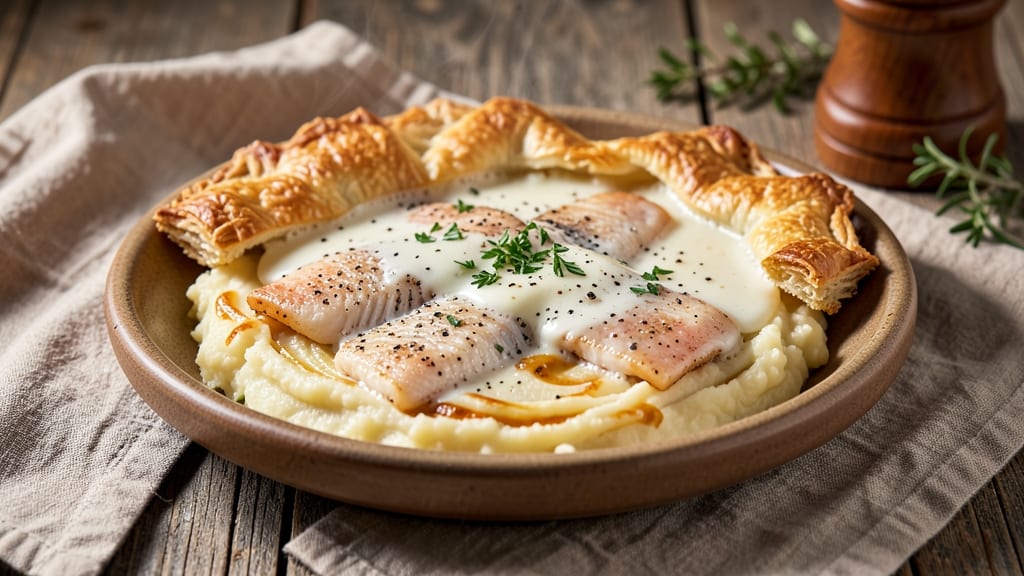
America’s Test Kitchen’s fisherman’s pie delivers the ultimate comfort food experience—creamy mashed potatoes baked beneath a golden, flaky crust, with tender fish and rich gravy layered between. This recipe transforms a classic British dish into a foolproof, restaurant-quality meal that’s perfect for special occasions or weeknight dinners.
The secret lies in perfectly poached fish, velvety mashed potatoes, and a crisp crust that seals in all the flavors.
What sets this recipe apart is the precision of each layer: flaky haddock or cod poached just until tender, a smooth gravy infused with herbs, and mashed potatoes so light they melt in your mouth.
The crust, made with buttery pastry, achieves that signature flaky texture by resting before baking, ensuring it’s crisp on top and tender underneath. Every bite combines the richness of the fish and gravy with the comfort of creamy potatoes and a satisfying crunch from the crust.
The result is a dish that’s both elegant and hearty—ideal for feeding a crowd or enjoying as a cozy solo meal. The layers of flavor and texture make it a standout, while the method is designed to be reliable, even for home cooks.
Whether you’re serving it for a holiday dinner or a casual family meal, this fisherman’s pie will leave everyone asking for seconds.
Ready in about 1 hour, this recipe balances simplicity with technique to deliver a dish that tastes like it came from a pub kitchen. The key steps—poaching the fish, layering carefully, and baking to perfection—ensure every element works together seamlessly. Here’s how to make it.
Ingredients for america's test kitchen fisherman's pie
Six layers of comfort—flaky crust, creamy potatoes, tender fish, and rich gravy—all built for foolproof perfection.
| Ingredient | Amount | Notes |
|---|---|---|
| Haddock or Cod Fillets 🐟 | 1 ½ lb | Skinless, boneless, cut into even pieces |
| Russet Potatoes 🥔 | 3 lbs | Yukon gold or similar for creaminess |
| Heavy Cream 🥛 | 1 cup | Full-fat for optimal texture |
| Whole Milk 🥛 | ½ cup | Warmed for smoother mash |
| Unsalted Butter 🧈 | ½ cup | Cold, cubed for flaky crust |
| All-Purpose Flour 🌾 | 2 cups | Plus 1 tbsp for dusting |
| Ice Water 💧 | ½ cup | For pastry dough elasticity |
| Fish Stock 🍲 | 1 ½ cups | Homemade or high-quality store-bought |
| Dry White Wine 🍷 | ¼ cup | Sauvignon Blanc preferred |
| Fresh Parsley 🌿 | ¼ cup | Chopped, for garnish and flavor |
| Fresh Thyme 🌿 | 1 tbsp | Leaves only, finely chopped |
| Salt 🧂 | 2 tsp | Kosher or sea salt |
| Black Pepper 🌶️ | ½ tsp | Freshly ground |
| Lemon Juice 🍋 | 1 tbsp | Freshly squeezed |
The fish is non-negotiable for this dish. Haddock or cod delivers that delicate, flaky texture—tilapia or pollock won’t hold up as well. Look for fillets with a vibrant color and minimal fishy odor, especially if buying frozen. Whole Foods or your local seafood market will have the freshest cuts, but the frozen section at Trader Joe's works fine if you're in a pinch. The key is poaching them just until tender—any longer and they'll turn rubbery. For best results, buy fillets already cut into even pieces to save time.
No white wine? Fish stock with a splash of lemon juice works in a bind, though the acidity won't be identical. Fresh herbs are ideal, but dried thyme at one-third the amount gets you close if you're short. The potatoes should be waxy for mashing—Yukon golds or red potatoes are perfect, but russets will work if boiled extra long. For the crust, cold butter and ice water are essential—this isn't a short cut. If you're feeling fancy, add a pinch of nutmeg to the mashed potatoes for depth, but it's not required.
Poached fish keeps 2 days in the fridge, covered with a damp towel to prevent drying. The mashed potatoes can be made ahead and reheated gently with extra milk or butter—just don't overmix or they'll turn gummy. Assemble the pie up to 24 hours before baking, but refrigerate uncovered to let the top dry slightly for better browning. The crust should rest 30 minutes before baking—this is where the magic happens. Leftovers reheat beautifully, though the crust may soften slightly. For a crispy top again, broil for 2-3 minutes.
Why You'll Love This Recipe
- One-Pan Magic: I swear by this recipe for lazy nights—just peel and slice those russets, flake the fish, and dump everything into one baking dish. No chopping boards to clean, no extra pots, just hands-off baking while you sip wine or scroll through your phone.
- Creamy Crisp Perfection: That buttery, golden crust on top? It’s the star. The ATK trick of layering thinly sliced potatoes with butter and milk creates a texture that’s crispy outside, creamy inside—like a hug in dish form. The haddock (or cod) adds that briny, flaky contrast that makes every bite irresistible.
- Leftovers for Days: Between us, this pie tastes even better the next day. I make a double batch on Sundays, and by Wednesday, it’s still the go-to for quick lunches or a cozy dinner with minimal effort. The flavors meld overnight, and reheating it in the oven keeps that perfect crust.
- Budget-Friendly Luxury: You’d think a dish this rich would break the bank, but it doesn’t. Cod or haddock is affordable, russets are cheap, and a little butter and cream stretch far. It’s the kind of meal that feels special without requiring a fancy ingredient list—just honest, satisfying comfort.
Step-by-step instructions for savory fisherman's pie
Mastering this classic requires precise technique for both the flaky crust and velvety filling.
Prepare the Fish and Stock Base
Preheat your oven to 375°F. In a large oven-safe skillet, melt 0.25 cup unsalted butter over medium heat. Add the 1.5 lb haddock or cod fillets, seasoned with 1 tsp salt and 0.25 tsp black pepper, and cook for 3-4 minutes per side until just opaque. Remove fish and set aside.
In the same skillet, deglaze with 0.25 cup dry white wine, scraping up browned bits. Add 1.5 cups fish stock and 1 tbsp lemon juice, then bring to a simmer. Stir in 1 tbsp fresh thyme and let reduce by half (5-6 minutes). The sauce should coat the back of a spoon and smell richly aromatic.
Create Ultra-Creamy Mashed Potatoes
While the fish cooks, peel and cube the 3 lbs russet potatoes. Boil in salted water for 15-18 minutes until fork-tender. Drain thoroughly, then return to the pot.
Warm the 0.5 cup whole milk and 1 cup heavy cream together in a saucepan until steaming. Add to potatoes along with 0.25 cup unsalted butter and mash until completely smooth. Season with remaining 1 tsp salt and 0.25 tsp black pepper. The mash should be silky with no lumps—this is your secret to restaurant-quality texture.
Assemble the Pie Layers
Spread the mashed potatoes evenly over the fish and reduced sauce in the skillet. Return to the oven and bake for 20 minutes to heat through completely. The top should be lightly golden and the filling bubbly around the edges.
Remove from oven and sprinkle with 0.25 cup chopped fresh parsley. Return to oven for 2-3 minutes just to wilt the parsley slightly—this adds freshness without overpowering the dish.
Make the Flaky Crust
In a bowl, combine 2 cups all-purpose flour, 1 tbsp ice water, and 0.5 tsp salt. Cut in the remaining 0.25 cup cold unsalted butter until mixture resembles coarse crumbs. Gradually add 0.5 cup ice water (one tablespoon at a time) until dough just comes together when pressed.
Roll dough between two sheets of parchment paper to 1/8-inch thickness, then carefully transfer to cover the pie. Trim excess dough and crimp edges with a fork. Cut decorative slits in the top for steam to escape.
Bake to Golden Perfection
Return pie to 400°F oven and bake for 25-30 minutes until crust is deep golden brown and edges are crisp. The filling should be hot throughout with no cold spots in the center.
Let rest for 10 minutes before serving—this allows juices to redistribute. The crust should be shatteringly crisp while the filling remains creamy. Garnish with additional parsley if desired and serve immediately with crusty bread to soak up every last bit of sauce.
Pro Tips For Making America'S Test Kitchen Fisherman'S Pie
- USE A KNIFE ON POTATOES: Don’t just mash them raw—parboil the peeled potatoes first, then drain and rough-chop them before adding to the cream mixture. This keeps the texture creamy but not gluey, and it cuts down on mashing time by half. I learned this after fighting with a sticky, uneven mash that refused to hold its shape.
- SALT THE FISH FIRST: Season the haddock or cod before poaching—at least 30 minutes ahead if possible. The recipe’s poaching liquid is flavorless without it, and salting early lets the seasoning penetrate. I used to skip this, and the fish always tasted bland no matter how much butter I added later.
- DON’T OVERMIX THE CREAM: Once you fold the cream into the potatoes, stop stirring the second everything’s just combined. Overmixing makes the topping dense and gummy. Just swirl it gently with a spatula—you’re aiming for marbled, not smooth. I’ve ruined three pies by turning the topping into a sad, heavy paste.
- POACH FISH IN SIMMERING, NOT BOILING: The recipe says "simmer," but I used to push it to a rolling boil—big mistake. Keep the water at a gentle simmer (tiny bubbles, not steam geysers) so the fish stays tender and doesn’t turn rubbery. A thermometer helps: aim for 160°F (71°C). I’ve had to rescue fish from the trash after boiling it aggressively.
Serving suggestions for leftovers
Classic Side Pairings
Serve this rich fisherman’s pie with a simple arugula salad dressed with lemon vinaigrette—the peppery bite cuts through the creaminess beautifully. I toss 4 cups baby arugula with 2 tbsp extra-virgin olive oil, 1 tbsp fresh lemon juice, and a pinch of flaky sea salt.
A crusty baguette or sourdough bread is essential for soaking up the gravy and mashed potato drippings. 🥖
Wine Pairings
A crisp Sauvignon Blanc from New Zealand or Loire Valley complements the dish perfectly—its citrus notes mirror the lemon in the recipe while balancing the richness. For red wine lovers, a light Pinot Noir with bright acidity works surprisingly well without overpowering the fish.
Avoid heavy reds like Cabernet, which would clash with the delicate flavors. 🍷
Seasonal Vegetable Additions
For spring or summer, add steamed asparagus or green beans to the pie filling before baking—just 8-10 minutes of steaming keeps them crisp-tender. In fall or winter, swap in roasted carrots or leeks for extra depth.
I often add ½ cup finely chopped leeks to the gravy for a subtle sweetness that pairs wonderfully with the fish. 🌿
Garnish & Presentation
Before serving, sprinkle the pie with toasted breadcrumbs mixed with 1 tsp fresh thyme and a pinch of smoked paprika for added texture and color. A drizzle of truffle oil (just ½ tsp) elevates the dish to restaurant quality.
For a rustic touch, serve in a cast-iron skillet straight from the oven—it keeps everything warm and adds to the cozy presentation. ✨
Make-Ahead Serving Tips
Assemble the pie up to 24 hours ahead and refrigerate uncovered to let the top dry slightly for better browning. Reheat at 350°F for 15-20 minutes until the crust is crisp again.
For a crispy crust, broil for 2-3 minutes at the end. Leftovers reheat well in the oven or microwave, though the crust may soften slightly—just broil briefly to restore crispness. 🔥
Dietary Adaptations
For a gluten-free version, use a store-bought gluten-free pie crust (like Caulipower or King Arthur) and ensure your flour is certified gluten-free. For dairy-free, substitute the heavy cream with full-fat coconut milk and use dairy-free butter in the crust.
The flavor remains rich, though the texture will be slightly lighter. Always check labels for hidden allergens! 🌱
Nutrition facts
Frequently asked questions
Can I substitute haddock or cod with another type of fish?
The recipe relies on haddock or cod for their delicate, flaky texture that holds up perfectly when baked. While pollock or tilapia could work in a pinch, they lack the same richness and may become mushy. For best results, stick to the recommended fish—it's what gives this dish its signature restaurant-quality texture.
Why does the crust need to rest before baking?
The 30-minute rest is crucial for creating that signature flaky texture. When cold butter melts during baking, it creates steam pockets that make the crust light and crispy. Skipping this step results in a tough, dense crust. Think of it like letting pie dough relax—it's where the magic happens!
How do I fix a soggy crust after baking?
If your crust turns out soggy, it's likely from too much moisture or not enough baking time. For future attempts, ensure the filling is hot before adding the crust, and bake at 400°F for 25-30 minutes** until golden brown. For an immediate fix, broil for 2-3 minutes to crisp the top.
Can I make this pie ahead of time?
Assemble the pie up to 24 hours ahead and refrigerate uncovered. This lets the top dry slightly for better browning. When ready to bake, add the crust and bake as directed. The flavors actually improve overnight as everything melds together beautifully.
What's the secret to ultra-creamy mashed potatoes?
The key is warm dairy and thorough mashing. Warm the milk and cream together until steaming, then mash until completely smooth with no lumps. Adding the butter while still hot helps create that velvety texture. Don't skip the draining step—excess moisture makes potatoes watery.