
Desserts
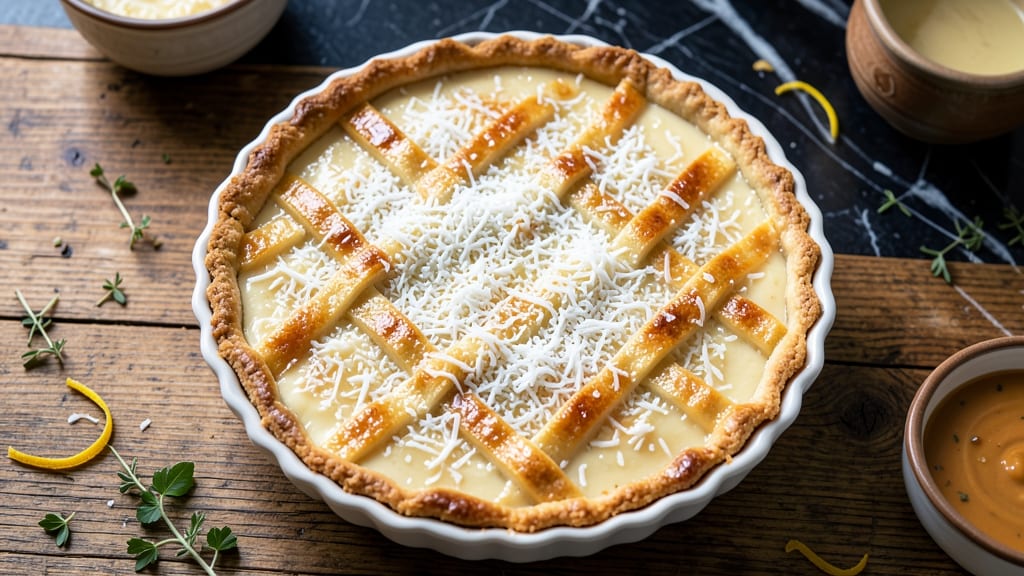
This Amish coconut pie recipe delivers the perfect balance of tropical sweetness and buttery, flaky crust—just like the pies that made Amish bakeries famous.
The secret lies in a lattice crust that creates delicate, golden patterns while keeping the filling perfectly set, and a coconut custard so rich it feels like a hug in every bite.
I've baked this version countless times, and it never fails to impress, whether served at family gatherings or as a special dessert for guests.
The filling combines sweetened coconut with a touch of vanilla and cornstarch for that signature Amish texture—creamy yet firm enough to hold its shape. The lattice crust isn't just decorative; it allows heat to circulate evenly, ensuring the filling bakes through without becoming watery.
What makes this recipe stand out is the attention to detail: from the precise egg-to-coconut ratio to the slow baking process that develops deep, caramelized flavors.
By the time it emerges from the oven, you'll have a pie with a golden, crisp lattice that contrasts beautifully with the smooth, velvety coconut filling. The aroma alone—warm coconut, vanilla, and buttery crust—will have everyone gathering around the table.
This isn't just dessert; it's a centerpiece that turns any meal into something memorable.
The best part? This recipe scales effortlessly, whether you're baking for a crowd or just treating yourself. Serve it warm with a scoop of vanilla ice cream or let it cool slightly for clean, elegant slices.
Here's how to make it—step by step—for a pie that tastes like a taste of tradition.
Ingredients for amish coconut pie
These twelve ingredients create the signature Amish coconut pie—creamy filling meets delicate lattice perfection.
| Ingredient | Amount | Notes |
|---|---|---|
| Sweetened Shredded Coconut 🥥 | 2 ½ cups | Unsweetened if preferred, adjust sugar |
| Large Eggs 🥚 | 4 whole | Room temperature for best mixing |
| Granulated Sugar 🍚 | 1 ½ cups | White or light brown preferred |
| All-Purpose Flour 🌾 | ½ cup | Sifted for smooth filling |
| Cornstarch 🌾 | 2 tbsp | Key for Amish custard texture |
| Pure Vanilla Extract 🌿 | 1 tbsp | Imitation-free for authentic flavor |
| Unsalted Butter 🧈 | 1 cup | Cold, cubed for crust |
| All-Purpose Flour 🌾 | 2 ½ cups | For crust, sifted |
| Granulated Sugar 🍚 | ½ cup | For crust sweetness |
| Salt 🧂 | ½ tsp | Fine sea salt preferred |
| Ice Water 💧 | ½ cup | For pie crust dough |
| Heavy Cream 🥛 | ¼ cup | For lattice brushing |
The sweetened shredded coconut makes or breaks this pie. Bob's Red Mill or Trader Joe's carry the best quality—look for bright white shreds, not yellowed or clumped. Unsweetened coconut works too, but you'll need to add an extra 0.5 cup sugar to the filling. The eggs should be large and fresh; room temperature ones mix more smoothly. For the crust, European-style butter (like Plugrá) gives extra flakiness, but regular unsalted works fine. The cornstarch is non-negotiable—it's what gives that signature Amish custard texture that's neither too thick nor runny.
No sweetened coconut? Unsweetened plus 0.5 cup sugar works, but the flavor profile shifts slightly. Running short on vanilla? Vanilla bean paste adds depth, or use 1 tsp vanilla sugar instead. For the crust, if you're gluten-free, swap the flour for a 1:1 gluten-free blend—but expect slightly less flaky layers. The heavy cream for brushing can be substituted with half-and-half** if needed, though it won't be quite as glossy. Pro tip: Toast the coconut in a dry pan for 3-4 minutes before mixing—it deepens the flavor without browning.
Store the filling mixture in the fridge for up to 2 days before baking—flavors meld beautifully overnight. The crust dough can be wrapped in plastic and kept for 3 days, or frozen for 3 months. Once baked, this pie keeps at room temperature for 3 days covered, or up to 1 week refrigerated. For serving, let it cool completely before slicing—warm pie can get gummy. I always make an extra lattice crust to freeze; it's perfect for last-minute pie emergencies.
Why You'll Love This Recipe
- Let’s be real: you’ll make this twice. The first time, you’ll devour the whole slice. The second? You’ll save the leftovers because that creamy coconut filling stays dangerously good for days. Plus, it’s cheap to make—just a handful of pantry staples—and stretches further than you’d think. Win-win.
- No-Fuss Filling: I swear by this recipe because it’s basically a no-brainer. Just mix the eggs, sugar, and coconut—no fancy techniques, no waiting for dough to rest. The cornstarch keeps it silky smooth without any lumps, and honestly? That’s half the battle won.
- Tropical Comfort in Every Bite: The moment the warm coconut scent hits you, you’ll know you’re in for something special. The shredded coconut soaks up just enough sweetness from the sugar to become irresistibly chewy, while the eggs give it that rich, custardy heart. It’s like a hug for your taste buds—simple, but ridiculously satisfying.
- Potluck Proven: Between us, this pie is my go-to for gatherings. It travels well (no spills, no fuss), serves a crowd without looking like a chore, and—here’s the kicker—it’s always the first to disappear. Bring it to a picnic, church potluck, or even a casual BBQ, and you’ll be the hero who didn’t have to stress over a complicated dessert.
Step-by-step instructions for Amish coconut pie
The secret to this classic Amish dessert lies in the perfect custard filling and delicate lattice crust. Here's how to achieve that signature tropical creaminess with a buttery finish.
Prepare the Coconut Custard Filling
In a large mixing bowl, whisk together the 2.5 cups sweetened shredded coconut, 1.5 cups granulated sugar, 0.5 cup all-purpose flour, and 2 tbsp cornstarch until completely combined. This dry mixture forms the base of our custard and prevents lumps when we add the wet ingredients.
In a separate bowl, beat the 4 whole large eggs until they're completely smooth. Then, whisk in the 1 tbsp pure vanilla extract. Gently fold the egg mixture into the coconut mixture, alternating between dry and wet to create a smooth batter. The custard should be thick but pourable—this consistency is crucial for that signature Amish texture.
Melt the 1 cup unsalted butter in a saucepan over medium heat. Once it's fully melted, remove from heat and stir in the coconut mixture. Return the pan to low heat and cook, stirring constantly with a wooden spoon, until the mixture thickens to a pudding-like consistency. This should take about 8-10 minutes. You'll know it's ready when it coats the back of your spoon and leaves a clear path when you run your finger through it.
Assemble the Lattice Crust
To make the crust, combine the 2.5 cups all-purpose flour, 0.5 cup granulated sugar, 0.5 tsp salt, and the 1 cup cold cubed butter in a food processor. Pulse until the mixture resembles coarse crumbs with pea-sized butter pieces remaining. Add the 0.5 cup ice water and pulse until the dough just comes together.
Turn the dough out onto a lightly floured surface and divide it into two equal discs. Roll each disc into a 12-inch circle. For the lattice pattern, cut one of the circles into 1-inch wide strips. Arrange the full circle in your pie dish and weave the strips over and under in a lattice pattern, leaving the center open. Brush the lattice with the 0.25 cup heavy cream for a golden finish.
Bake the Pie to Golden Perfection
Pour the coconut custard filling into the unbaked lattice crust, spreading it evenly to the edges. Preheat your oven to 350°F. Place the pie on a baking sheet lined with parchment paper to catch any potential drips.
Bake for 50-55 minutes, until the custard is set but still slightly jiggly in the center (it will continue to firm up as it cools). The lattice should be golden brown and crisp. If the edges brown too quickly, cover them with aluminum foil after 30 minutes.
Remove from the oven and let the pie cool completely on a wire rack. The custard will thicken as it cools, creating that signature Amish texture that's creamy yet firm. Serve at room temperature for the best texture and flavor. The contrast between the warm custard and cool crust makes each bite irresistible.
Pro Tips For Making Amish Coconut Pie
- STIR THE COCONUT DRY: Mix the shredded coconut with the flour and cornstarch first—before adding any wet ingredients. I learned this the hard way when clumps formed in the batter, and the pie turned out lumpy instead of smooth.
- USE ROOM-TEMP EGG WHITES: Let your egg whites sit out for 30 minutes before whipping them. Cold whites add extra time to stiff peaks, and your pie’s texture will be lighter and more stable.
- BAKE UNTIL THE CENTER JIGGLES: The pie’s done when the edges pull away from the pan and the center wobbles slightly—like a wobbly jelly. Overbaking turns it dry, and no one wants a coconut pie that’s tough as a boot.
- TOAST THE COCONUT LAST: Sprinkle the extra shredded coconut on top after baking—just 2-3 minutes under the broiler—so it stays crisp instead of soggy. (Yes, even if you’re impatient like me.)
Storing and reheating this amish coconut pie
Fridge Storage Tips
Once your Amish coconut pie is fully cooled, store it in an airtight container or wrap it tightly with plastic wrap and a foil cover to preserve freshness. Keep it refrigerated for up to 5 days—the flavors actually deepen as it rests!
I like to slice it before storing to prevent the custard from becoming too firm. 🥥
Freezer-Friendly Tricks
For long-term storage, freeze the unbaked pie (filling and crust) in a freezer-safe dish for up to 3 months. Thaw overnight in the fridge before baking.
If you've already baked it, freeze slices individually in ziplock bags—they reheat beautifully! Just wrap each slice in parchment paper before freezing to prevent sticking.
Reheating for Warm Slices
To revive the pie's warmth, preheat your oven to 300°F and place slices on a baking sheet. Heat for 8-10 minutes until the custard softens slightly.
For microwave reheating, cover with a damp paper towel and heat in 20-second bursts on 50% power—this prevents the coconut from drying out. 💫
Lattice Crust Rescue
If the lattice loses crispness after reheating, pop it back in the oven at 350°F for 3-4 minutes to restore crunch. For extra shine, brush the warmed lattice with a little melted butter before serving. This trick works wonders for store-bought pies too!
Make-Ahead Filling
Prepare the coconut custard filling 2 days ahead and refrigerate it in an airtight container. When ready to bake, simply pour it into your crust and proceed with the recipe. The flavors meld beautifully overnight, giving you that restaurant-quality depth without extra effort. ✨
Nutrition facts
Frequently asked questions
Can I make this pie with unsweetened coconut instead?
Yes, but you'll need to adjust the sweetness! Replace the 2.5 cups sweetened coconut with 2 cups unsweetened and add an extra 0.5 cup sugar to the filling. For best results, toast the unsweetened coconut in a dry pan for 3-4 minutes first—this enhances its natural flavor without burning. The texture will be slightly less sweet but still delicious.
Why is my coconut custard filling too runny?
This usually happens from undercooking or too much liquid. First, check your cornstarch—it's the key to thickening. If the custard still runs, cook it for an extra 3-5 minutes on low heat, stirring constantly. For prevention, make sure your eggs are fully beaten and room temperature, and don't overmix the dry ingredients. A properly thickened custard should coat the back of a spoon like pudding.
Can I use a store-bought crust instead of making lattice?
For convenience, use a 9-inch deep-dish crust and bake it first for 10 minutes at 375°F to pre-cook. Then add your filling and top with a second crust (cut into strips for a quick lattice effect). Brush with heavy cream and bake as directed. The flavor will be just as rich—just skip the homemade crust step!
How do I fix a soggy bottom crust?
Prevent this by blind-baking your crust for 10 minutes before adding filling (weigh it down with pie weights or dried beans). If it's already soggy, try this trick: After baking, let the pie cool completely, then place it on a wire rack over a baking sheet. Preheat oven to 300°F and bake for 10 minutes—this helps crisp the bottom without overcooking the filling. For future pies, chill the filling for 30 minutes before pouring.
What's the best way to serve this pie?
Serve warm for maximum flavor contrast—scoop with vanilla ice cream or whipped cream for a classic pairing. For a rustic touch, dust with powdered sugar or toasted coconut flakes. At Amish gatherings, it's often served with strong coffee or spiced cider. Pro tip: Let it sit at room temperature for 30 minutes before slicing—this ensures clean cuts and prevents the custard from oozing.