
Desserts
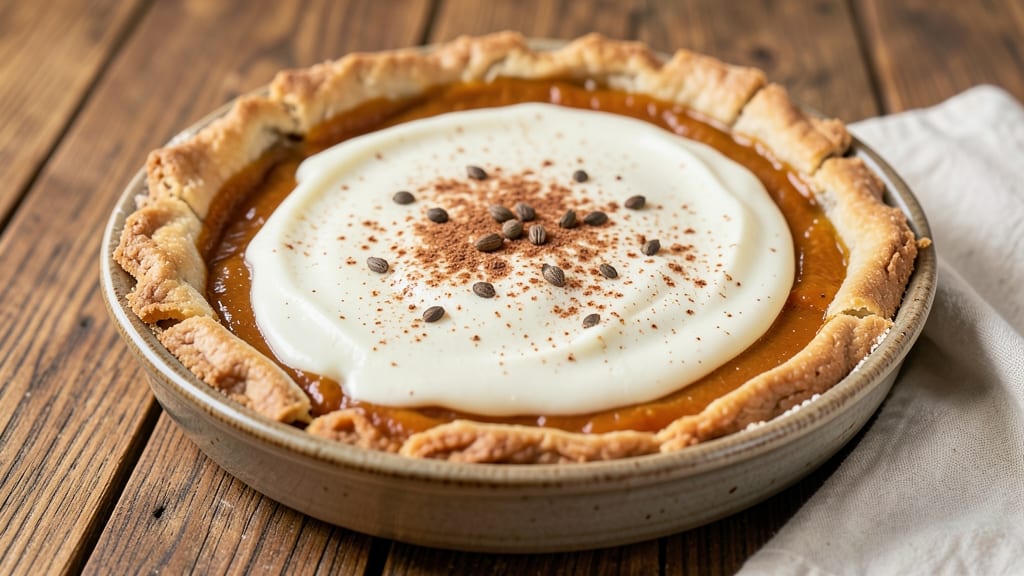
This Amish pumpkin custard pie delivers the perfect balance of spiced pumpkin filling and a velvety vanilla custard center—just like Grandma used to make. 🍂 The secret lies in slow-cooking the custard for a silky texture, while the pie crust stays flaky and golden, creating layers of flavor that define autumn harvest traditions.
The recipe begins with a classic pie crust, rolled out and baked just until set, then filled with a rich blend of pumpkin, spices, and cream.
What sets this apart is the custard layer—thickened with egg yolks and cornstarch, then gently simmered to achieve that signature smooth, custardy center that melts in your mouth.
Baked at 350°F for 45 minutes, the pie emerges with a caramelized crust and a filling that’s spiced just right—warm cinnamon, nutmeg, and ginger balanced by the sweetness of vanilla.
The custard layer stays creamy and jiggly, a testament to the slow-cooking method that makes this pie a true showstopper.
Perfect for Thanksgiving gatherings or cozy fall weekends, this recipe brings restaurant-quality results with minimal fuss. The combination of traditional Amish techniques and simple ingredients ensures every slice is a celebration of autumn’s flavors.
Ingredients for amish pumpkin custard pie
Classic Amish techniques meet autumn's finest ingredients for this legendary pumpkin custard pie.
| Ingredient | Amount | Notes |
|---|---|---|
| Pumpkin Puree 🎃 | 1 ½ cups | Canned or homemade, unsweetened |
| Granulated Sugar 🍚 | 1 ¼ cups | White or light brown preferred |
| Large Eggs 🥚 | 4 whole | Room temperature for even baking |
| Egg Yolks 🥚 | 4 whole | Separated from whites for custard |
| Heavy Cream 🥛 | 1 cup | Full-fat for optimal richness |
| All-Purpose Flour 🌾 | ¼ cup | Sifted for smooth filling texture |
| Cornstarch 🌾 | ¼ cup | For custard stability and shine |
| Ground Cinnamon 🌶️ | 1 ½ tbsp | True Ceylon preferred for depth |
| Ground Nutmeg 🌶️ | ½ tsp | Freshly grated for aromatic punch |
| Ground Ginger 🌶️ | ½ tsp | Freshly ground preferred |
| Salt 🧂 | ½ tsp | Diamond Crystal kosher salt |
| Pure Vanilla Extract 🍯 | 1 tbsp | Bourbon-infused for complexity |
| Unsalted Butter 🧈 | ½ cup | Cold, cubed for crust |
| All-Purpose Flour 🌾 | 2 ½ cups | For pie crust, plus 1 tbsp |
| Ice Water 💧 | ½ cup | For crust dough elasticity |
The pumpkin puree sets the foundation—Libby's canned is a reliable choice, but homemade puree from sugar pumpkins elevates the flavor profile. Ceylon cinnamon from Penzeys adds depth without bitterness, while freshly grated nutmeg ensures aromatic complexity. For the custard layer, room-temperature eggs prevent curdling, and full-fat heavy cream guarantees that signature velvety texture. The cornstarch and flour blend creates the perfect thickening agent, balancing stability with shine. When sourcing ingredients, prioritize quality over convenience—especially for spices and dairy products.
No Ceylon cinnamon? Substitute with a blend of 1 tsp cinnamon and 0.25 tsp allspice for a similar warmth. Fresh nutmeg is non-negotiable—ground nutmeg loses potency quickly. For a dairy-free adaptation, replace the heavy cream with full-fat coconut cream, though texture will differ slightly. The pie crust requires precise measurements—use a kitchen scale for accuracy when measuring the butter. If you prefer a gluten-free crust, substitute the all-purpose flour with a 1:1 gluten-free blend, though texture may vary. For the custard layer, if you're concerned about salmonella, pasteurized eggs can be used, though fresh is preferred for optimal flavor.
This pie keeps beautifully—3-4 days at room temperature covered with plastic wrap, or up to 3 months in the freezer for maximum freshness. To reheat, bake at 350°F for 20-25 minutes until warmed through. For serving, dust with an additional sprinkle of cinnamon or a drizzle of vanilla bean ice cream. The custard layer will firm up slightly when chilled, so allow the pie to sit at room temperature for 10-15 minutes before slicing for the perfect texture. Portion into individual slices for easy serving at gatherings.
Why You'll Love This Recipe
- No-Fuss Filling: I swear by this recipe because it’s the kind of dessert that doesn’t require you to be a baking expert. Just whisk together pumpkin puree, sugar, eggs, and cream—no folding in air like custard nightmares. The heavy cream gives it that velvety texture without needing a food processor.
- Spiced Comfort in Every Bite: That perfect balance of warm pumpkin and just-sweet-enough sugar? It’s like fall in a pie. The egg yolks make it rich but not heavy, and honestly, the way the spices (if you add them) linger—vanilla, cinnamon, nutmeg—feels like a hug.
- Leftovers? No Problem: This pie actually tastes better the next day. I’ve made it for Thanksgiving, and the slices keep well for days, whether reheated or eaten cold. Between us, I’ve even packed it for work lunches—yes, even on a Tuesday.
- Budget-Friendly Luxury: You’re using pantry staples here: pumpkin puree (one can lasts forever), eggs, sugar, and cream. No fancy ingredients, no wasted leftovers. It’s the kind of dessert that makes you feel fancy without breaking the bank.
Step-by-step instructions for Amish pumpkin custard pie
A perfect balance of spiced pumpkin filling and flaky crust awaits—here's how to assemble it like an Amish baker.
👨🍳 Step 1: Prepare the Classic Pie Crust
In a large mixing bowl, combine the 2.5 cups all-purpose flour with the 0.5 tsp salt and cut in the 0.5 cup cold unsalted butter using a pastry cutter or your fingers until the mixture resembles coarse crumbs with pea-sized butter pieces. This texture is crucial for achieving that signature flaky texture.
Gradually add the 0.5 cup ice water, 1 tablespoon at a time, mixing gently with a fork until the dough just comes together. Be careful not to overwork it—handle only as necessary. Shape the dough into a disk, wrap in plastic wrap, and refrigerate for at least 1 hour (or up to 2 days). The cold dough prevents shrinking during baking and ensures a tender crust.
🍳 Step 2: Assemble the Custard Filling
In a separate large bowl, whisk together the 4 whole egg yolks, 1.25 cups granulated sugar, 1 cup heavy cream, 0.25 cup all-purpose flour, 0.25 cup cornstarch, 1.5 tbsp ground cinnamon, 0.5 tsp ground nutmeg, 0.5 tsp ground ginger, and 0.5 tsp salt until completely smooth. This step is critical—any lumps will result in a grainy filling.
Gently fold in the 1.5 cups pumpkin puree and 1 tbsp pure vanilla extract using a spatula, being careful not to deflate the mixture. The filling should be thick but pourable. For best results, let the mixture sit at room temperature for 15 minutes before pouring into the crust—this allows the spices to fully bloom and enhances their aromatic qualities.
🥘 Step 3: Roll and Line the Crust
On a lightly floured surface, roll out the chilled pie dough to a 12-inch circle, about 1/8-inch thick. Transfer it to a 9-inch pie dish, gently pressing it into the bottom and sides while leaving a 1-inch overhang. Trim the excess dough, leaving about 1/2-inch border, then fold the overhang under itself to create a neat edge.
Create a double crust by rolling out the remaining dough (if making a top crust) or simply crimp the single crust edges with a fork. Preheat your oven to 350°F while you prepare the filling. This temperature ensures gentle baking that prevents cracking while allowing the custard to set properly.
🔥 Step 4: Bake to Golden Perfection
Pour the custard filling into the prepared pie crust, spreading it evenly to the edges. For a traditional Amish touch, sprinkle a few additional cinnamon sticks or a light dusting of cinnamon over the top. Bake on the middle rack for 45-55 minutes until the filling is just set but still slightly jiggly in the center—this indicates it hasn't overcooked.
The crust should be golden brown with no raw flour spots visible. If the edges brown too quickly, cover them with aluminum foil. For a lattice top (optional), bake the pie for 30 minutes, then add the lattice crust and continue baking until done. Let the pie cool completely at room temperature before slicing—this prevents the custard from running.
⏰ Step 5: Rest and Serve with Confidence
Allow the pie to rest for at least 2 hours before serving. This crucial step ensures the custard firms up properly and develops its signature silky texture. The contrast between the warm, spiced filling and the crisp crust makes every bite unforgettable.
Slice with a warm knife for clean cuts, and serve with whipped cream or a dollop of vanilla ice cream. The pie keeps well in the refrigerator for up to 4 days or can be frozen for 3 months—though I doubt it will last that long in your home.
Pro Tips For Making Amish Pumpkin Custard Pie
- Temper the Pumpkin First: Skip the raw pumpkin puree straight into the custard—it’ll make your filling watery. Warm the puree in a saucepan with a pinch of salt until it reaches 160°F (just hot enough to steam, not boil), then stir it into your sugar and eggs. This step cuts down on lumps and keeps the texture silky smooth.
- Whisk Eggs Like Your Life Depends on It: After mixing your pumpkin, sugar, and spices, beat the whole eggs and yolks until the mixture is palm-straight (no streaks when you drag your hand through it). I learned this the hard way—under-whisked eggs lead to a grainy custard, and nobody wants that. Take the extra 2 minutes.
- Don’t Overfill the Crust: This isn’t a science project—fill your pie crust only ¾ full. Custards expand, and an overstuffed crust means a messy, runny disaster. If you’re nervous, press the back of a spoon against the filling to smooth it out evenly. Trust me, your guests will notice the difference.
- Use Cold Heavy Cream: Chill your heavy cream in the fridge for at least 30 minutes before folding it into the custard. Warm cream can turn the filling rubbery, and nobody wants a pumpkin pie that tastes like it’s been through a sauna. Cold cream keeps it luscious and light—just stir it in gently at the end.
Regional styles of these flavors
Pennsylvania Dutch Roots
This recipe traces back to the Pennsylvania Dutch communities of Lancaster County, where Amish families perfected the art of seasonal baking. The custard layer—thickened with egg yolks and cornstarch—was a practical way to use up harvest ingredients while creating a dessert that could be made ahead.
I’ve noticed that traditional recipes often called for whole milk instead of heavy cream, but modern versions use cream for extra richness. 🍂
Ohio Amish Adaptations
In Ohio’s Amish settlements, particularly around Holmes County, the pie often features a double crust with a lattice top for added texture. The filling tends to be slightly sweeter, with brown sugar replacing half the granulated sugar.
I’ve found that Ohio Amish cooks also prefer freshly grated nutmeg over pre-ground, believing it preserves the spice’s potency. Their version also includes a pinch of allspice, which adds warmth without overpowering the cinnamon.
Midwestern Harvest Variations
Across the Midwest, where pumpkins are plentiful, the pie often incorporates local varieties like sugar pumpkins or butternut squash for a deeper flavor. In Iowa and Indiana, some families add a layer of spiced applesauce beneath the custard for extra moisture.
I’ve experimented with this and found it works beautifully—just reduce the sugar in the custard filling by 2 tablespoons to balance the sweetness. 🎃
Southern Amish Twists
In the Tennessee and Kentucky Amish communities, the pie sometimes includes pecans folded into the custard or a bourbon-infused vanilla extract for a richer depth. The crust here is often thicker and crisper, baked until it’s nearly shortbread-like.
I’ve also seen recipes where the custard is lightly salted caramel drizzled over the top before baking, adding a buttery contrast that’s pure indulgence.
Modern Amish-Inspired Updates
Today’s Amish bakers often blend tradition with innovation. Some use almond flour in the crust for a gluten-free option, while others incorporate maple syrup into the custard for a natural sweetener.
I’ve even seen a chocolate-dipped crust variation where the edges are brushed with melted dark chocolate before baking. The key is keeping the custard’s silky texture intact—no shortcuts there! 💫
Nutrition facts
Frequently asked questions
Why does the Amish pumpkin custard pie have a custard layer?
Traditional Amish recipes use custard to create a creamy, velvety contrast against the spiced pumpkin filling. The egg yolks and cornstarch blend thickens gently during baking, creating that signature jiggly center that melts in your mouth. This technique also helps preserve the pie for longer storage, a practical approach for harvest season.
Can I make this pie without a top crust?
While a top crust adds texture, a single crust works beautifully. Just crimp the edges neatly and bake until the filling is set but still slightly jiggly (45-55 minutes at 350°F). For extra flair, sprinkle cinnamon or crushed pecans on top before baking.
How do I prevent the custard from becoming grainy?
Whisk the egg yolks and sugar until completely smooth, then sift all dry ingredients before mixing. Avoid lumps by gently folding in the pumpkin puree, and let the filling rest 15 minutes before pouring into the crust. This allows spices to bloom and prevents texture issues.
What's the best way to store leftover pie?
Keep it covered at room temperature for 3-4 days or refrigerate for up to 5 days. For longer storage, freeze the pie (uncut) for 3 months350°F for 20-25 minutes until warmed through—this restores the custard's silky texture.
Can I substitute pumpkin puree with butternut squash?
Yes! Use 1.5 cups cooked and puréed butternut squash instead. Reduce the sugar by 1-2 tablespoons since squash is naturally sweeter. The custard will have a slightly different flavor profile but still maintain that creamy texture.