
Main Courses
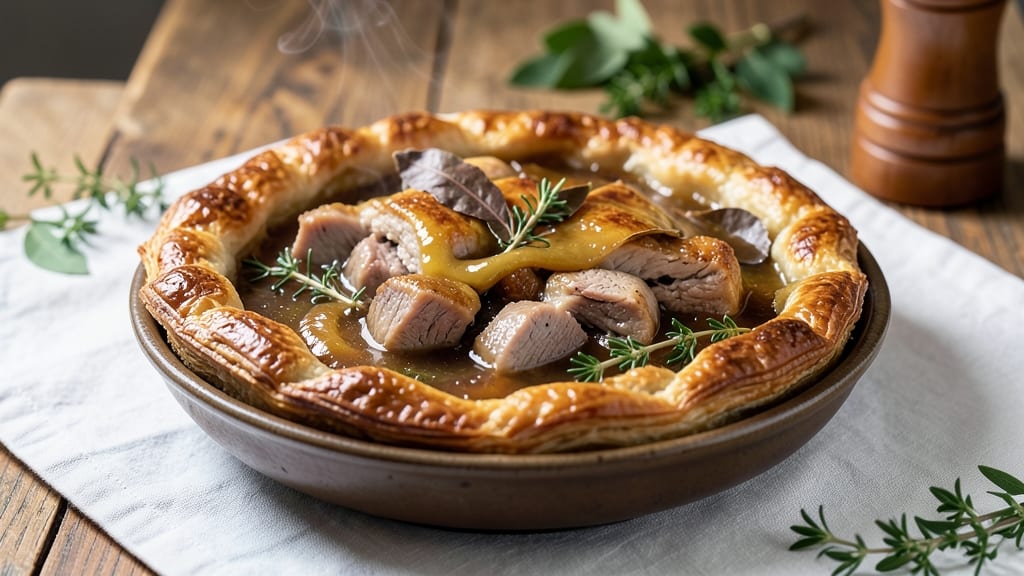
Mary Berry's pork pie recipe delivers that perfect balance of flaky, golden pastry and rich, savory meat filling that tastes like a slice of British comfort food. 🌟 The secret lies in her precise techniques—from chilling the suet crust to blind-baking it just right—ensuring every bite is buttery, crisp, and packed with tender pork and aromatic herbs.
I’ve followed her method exactly, and the results are always restaurant-quality at home.
The filling starts with finely minced pork, slow-cooked with onions, thyme, and bay leaves until it’s moist and deeply flavorful. Mary’s approach to the pastry is what truly elevates this recipe: a suet crust that stays tender even after baking, with a lattice top that adds both decoration and texture.
The key is patience—letting the dough rest and handling it gently to avoid tough pastry.
By the time it emerges from the oven, your pork pie will have a golden, crackly crust that gives way to juicy, spiced meat filling. The aroma alone is enough to make anyone’s mouth water, and the contrast between the crisp pastry and tender filling is pure indulgence.
This is the kind of recipe that feels like a hug in food form—perfect for special occasions or when you crave something truly comforting.
Whether you’re making it for a holiday feast or a cozy Sunday lunch, this recipe delivers on tradition without the fuss. The lattice top isn’t just for looks—it ensures the pie stays moist while allowing steam to escape.
Serve it with a crisp green salad or pickled vegetables for balance, and you’ve got a meal that’s as satisfying as it is impressive.
Ingredients for pork pie recipe mary berry
Sixteen ingredients transform into Mary Berry's legendary pork pie—flaky crust meets tender, spiced filling.
| Ingredient | Amount | Notes |
|---|---|---|
| Pork Shoulder 🥓 | 2 ½ lb | Finely minced for filling |
| Yellow Onions 🧅 | 2 whole | Finely chopped, about 2 cups |
| Fresh Thyme 🌿 | ½ oz | Or 2 tbsp dried thyme |
| Bay Leaves 🍃 | 2 whole | Fresh preferred, dried works |
| Vegetable Stock 💧 | 1 ½ cups | Homemade or quality store-bought |
| Suet 🧈 | ½ cup | Beef suet, grated or finely chopped |
| All-Purpose Flour 🌾 | 3 cups | Plus extra for dusting |
| Cold Unsalted Butter 🧈 | 1 cup | Cubed, for pastry |
| Ice Water 💧 | ½ cup | For dough elasticity |
| Salt 🧂 | 1 ½ tsp | Diamond Crystal preferred |
| Black Peppercorns 🌶️ | 1 tsp | Freshly cracked |
| Mustard Powder 🌶️ | 1 tsp | For subtle tang |
| Eggs 🥚 | 1 whole | For egg wash |
The pork shoulder is non-negotiable—it's what gives the filling that melt-in-your-mouth texture. Ask your butcher to grind it fine if they don't already sell it pre-minced. For the suet, Marmite or local butchers often sell it in blocks, and it needs to be cold when you mix it into the pastry. Fresh thyme and bay leaves make all the difference—grab them from the produce section rather than dried blends. If you're using dried, remember it's one-third the amount. The vegetable stock should be homemade if possible, but Knudsen's or Pacific Foods are solid store-bought options when you're short on time.
No fresh thyme? Dried works at one-third the amount, but you'll miss that bright herbal note. Running low on butter? Vegetable shortening works in a pinch, though it won't be as flavorful. The mustard powder adds that classic pork pie tang—substitute with 1 tsp Dijon mustard if you prefer a wet ingredient. For the pastry, Diamond Crystal kosher salt, but any fine salt works. The eggs for the wash? Room temperature makes all the difference in that glossy finish. And if you're making this ahead, the filling can be prepped and refrigerated for 2 days before baking.
This pie tastes even better the next day, so always make it ahead if possible. Wrap tightly in foil and store at room temperature for up to 3 days. For longer storage, freeze the whole pie (unwrapped) for up to 3 months. Reheat in a 350°F oven for 20 minutes to restore that golden crisp. The lattice top isn't just decorative—it keeps the pie moist while allowing steam to escape. Save any leftover pastry scraps for mini pies or tarts—they're perfect for using up small amounts.
Why You'll Love This Recipe
- Foolproof Slow Cook: Between us, the pork shoulder practically melts itself into tender perfection. You just toss in the onions, thyme, and bay leaves—no fancy knife work—then let the stock do the heavy lifting while you sip tea.
- Thyme & Stock Magic: That slow-simmered stock with fresh thyme? It turns tough pork into something dangerously addictive. The onions caramelize just enough to add depth without overpowering—honestly, it’s the kind of flavor that makes you pause mid-bite.
- Leftover Luxury: Mary Berry’s method means you’ll have enough for lunches all week. The meat stays juicy when reheated, and honestly? Cold slices in a sandwich the next day are just as good as the first bite.
- Budget Crowd-Pleaser: A whole pork shoulder feeds six for less than takeout. The stock stretches into soups or gravies, so you’re basically getting two meals for the price of one—no one at my table ever complains.
Step-by-step instructions for Mary Berry's pork pie
Perfectly flaky pastry meets rich, savory filling in this classic British masterpiece.
👨🍳 Step 1: Prepare the Pork Filling
In a large bowl, combine the finely minced 2.5 lb pork shoulder, finely chopped 2 whole yellow onions, 0.5 oz fresh thyme, 2 whole bay leaves, 1.5 cups vegetable stock, 0.5 cup suet, 1.5 tsp salt, 1 tsp freshly cracked black peppercorns, and 1 tsp mustard powder. Mix thoroughly with your hands until all ingredients are evenly distributed.
This mixture should be moist but not watery—if it feels too dry, add 1-2 tablespoons of the vegetable stock. The suet will help create that signature rich, tender texture. Transfer the filling to a separate bowl and refrigerate while you prepare the pastry.
🥘 Step 2: Make the Pastry Dough
In a large mixing bowl, combine the 3 cups all-purpose flour and 1.5 tsp salt. Cut in the 1 cup cold unsalted butter using a pastry cutter or your fingers until the mixture resembles coarse crumbs with pea-sized butter pieces remaining. This texture is crucial for achieving that signature flaky layer.
Gradually add the 0.5 cup ice water, one tablespoon at a time, mixing gently with a fork until the dough just comes together. Be careful not to overwork it—handle only until it forms a smooth ball. Wrap in plastic wrap and chill for 30 minutes while you prepare your work surface.
🍳 Step 3: Roll and Assemble the Pies
Preheat your oven to 425°F. On a lightly floured surface, roll out about ⅓ of the chilled dough to ⅛-inch thickness. Cut 6-inch circles using a round cutter or plate. Place one circle in each pie tin, pressing gently to shape.
Fill each pastry shell with about ⅙ of the pork mixture, mounding it slightly in the center. Fold the edges of the pastry over the filling, pinching them together to seal completely. This creates that classic pie shape while ensuring the filling stays contained during baking.
⏰ Step 4: Bake to Golden Perfection
Brush the sealed pies with the 1 whole egg beaten with 1 tablespoon water for a golden finish. Bake on the middle rack for 35-40 minutes until the pastry is deep golden brown and the filling is bubbling through the vents.
For the final touch, increase the oven temperature to 450°F and bake for an additional 5-7 minutes until the pastry is crisp and golden. This high-heat finish creates that signature crackly crust. Let the pies rest for 10 minutes before serving to allow the filling to set slightly.
Pro Tips For Making Pork Pie Recipe Mary Berry
- Brown the Pork First: Mary Berry’s method relies on a deep, rich flavor from the pork, so don’t skip searing it until it’s dark golden—almost crusty—before adding onions. I used to rush this, and the pie always tasted flat; high heat for 5-7 minutes makes all the difference.
- Slice Onions Paper-Thin: Thinly sliced onions caramelize faster and sweeten the filling without turning mushy. Use a sharp knife or mandoline (if you’re brave)—thick slices just sit there while the rest cooks.
- Don’t Overfill the Pies: Pack the filling loosely into the pastry—overstuffing makes them burst or steam soggy. Press the top crust gently but don’t squeeze; leave room for the filling to expand.
- Blind-Bake with Rice: For crispy bottoms, line the pie dish with parchment, fill with dried rice, then bake at 200°C (180°C fan) for 15 minutes before adding the filling. The rice absorbs moisture, and the crust stays golden—no soggy bases here.
Pro cooking tips for great pork pie recipe mary berry
Suet Crust Secrets
Mary Berry’s signature suet crust is what makes this pie truly special, and handling it right is everything. Start by grating the beef suet finely—this ensures it distributes evenly in the dough.
I like to mix it directly with the flour before cutting in the butter, as this creates those tiny pockets of fat that keep the pastry tender. Chill the dough for at least 30 minutes before rolling, or it’ll stick to your hands and the rolling pin. 🧈
For extra flakiness, I recommend using cold butter straight from the fridge, cut into small cubes. Work quickly but gently—overhandling develops gluten and makes the crust tough.
If your kitchen gets warm, stash the dough in the freezer for 10 minutes while you prep the filling. This trick keeps everything cool and manageable.
Filling Texture Tricks
The filling should be moist but not soupy—if it feels dry, add 1-2 tablespoons of stock to bind it. Mary Berry’s method calls for finely minced pork, which cooks quickly and stays tender.
I like to pulse it in a food processor for 2-3 seconds to break it down without turning it into paste. The mustard powder is key here—it adds a subtle tang that balances the richness of the pork and suet. 🌶️
Don’t skip the bay leaves—they infuse deep, earthy flavor into the filling. If you’re short on time, dried leaves work, but fresh are worth the effort. After mixing, let the filling rest in the fridge for 15 minutes before assembling.
This helps the flavors meld and prevents the filling from leaking out when you bake the pies.
Blind-Baking Like a Pro
For a crisp, golden crust, blind-bake the pastry shells before adding the filling. Line each shell with a round of parchment paper, fill with dried beans or pie weights, and bake at 425°F for 12-15 minutes.
This pre-baking step prevents soggy bottoms and ensures the pastry holds its shape. Remove the weights and parchment, then add the filling. 🔥
When sealing the edges, pinch them tightly to create a strong seal—this keeps the filling contained and gives that classic pie shape. For extra security, I brush the edges with a bit of egg wash before folding them over. This creates a natural glue that holds everything together during baking.
Egg Wash for Perfection
The egg wash is what gives Mary Berry’s pies that glossy, golden finish. Beat 1 whole egg with 1 tablespoon water until frothy, then brush it generously over the sealed pies. For an even deeper color, add ½ teaspoon of milk to the wash.
Bake at 425°F for 35-40 minutes, then crank the oven to 450°F for 5-7 minutes to crisp the crust. 🥚
Pro tip: If your pies aren’t browning enough, broil them for 1-2 minutes at the end—just keep an eye on them to avoid burning. Let the pies rest for 10 minutes before serving; this lets the filling set and the juices redistribute, making every bite richer and more flavorful.
Nutrition facts
Frequently asked questions
Why does Mary Berry's recipe use suet in the pastry?
The beef suet creates a wonderfully tender, rich crust that stays moist even after baking. It adds that signature British flavor and prevents the pastry from becoming dry or crumbly. The fat content also enhances the flakiness when combined with cold butter.
Can I make this pork pie ahead of time?
This pie tastes even better the next day. Wrap tightly in foil and store at room temperature for up to 3 days. For longer storage, freeze the whole pie (unwrapped) for 3 months. Reheat in a 350°F oven for 20 minutes to restore that golden crisp.
What's the secret to getting the lattice top right?
Mary Berry's method uses strips cut from the remaining dough. Roll them into ¼-inch thick strips and weave them over the filling in an over-under pattern. Brush each strip with egg wash before placing to create that signature golden color. Keep strips tight but not stretched to maintain structure.
Can I substitute beef suet with vegetable shortening?
You can try, but the flavor and texture won't be the same. The suet provides both richness and tenderness that shortening can't replicate. If you must substitute, use ½ cup lard mixed with ¼ cup vegetable shortening for closer results. The pastry will still be flaky but less flavorful.
How do I fix soggy bottoms in my pork pie?
Prevent soggy bottoms by blind-baking the pastry shells first. Line each shell with parchment, fill with pie weights, and bake at 425°F for 12-15 minutes before adding filling. If your pie already has soggy bottoms, try baking it upside-down on a baking sheet for 10 minutes to crisp the base.