
Main Courses
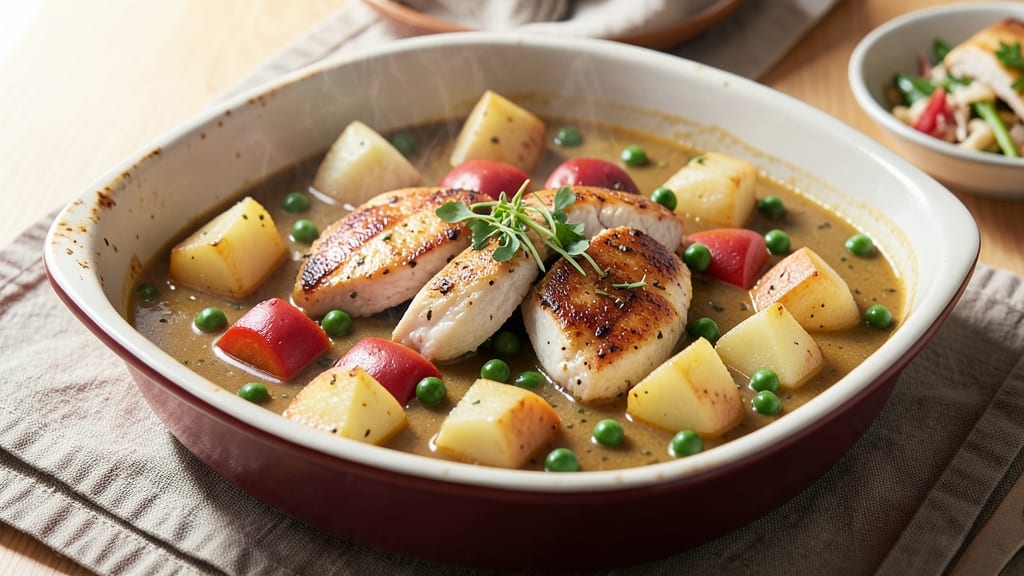
This pot pie filling recipe without crust delivers all the comforting flavors of classic pot pie in a streamlined, one-pan approach.
I developed it after years of making traditional pot pies—only to realize the filling alone could be just as satisfying, especially when served in individual ramekins or a baking dish.
The secret lies in building a rich, velvety gravy from scratch, layered with tender chicken, seasonal vegetables, and herbs that infuse every bite.
What makes this recipe truly professional is the technique: a proper roux forms the foundation for the gravy, ensuring it's thick enough to coat the vegetables and chicken without being gluey.
I use a combination of chicken stock, cream, and a splash of white wine to create depth of flavor that rivals any restaurant-style pot pie. The vegetables—carrots, peas, and potatoes—simmer until perfectly tender, absorbing the savory gravy while maintaining their natural sweetness.
By the time it emerges from the oven, you'll have a dish that's rich, hearty, and ready to serve—no crust needed. The gravy will be silky and flavorful, the chicken fork-tender, and the vegetables bright and vibrant.
This is the kind of filling that transforms a simple baking dish into a centerpiece-worthy meal, perfect for family dinners or cozy weeknight suppers.
Serve it in individual ramekins for elegant portions, or in a larger baking dish for sharing. The beauty of this recipe is its versatility—it works as a standalone dish or as a filling for crustless pot pies, all while cutting down on prep time and cleanup.
Let's get started on creating a filling that's just as satisfying without the crust.
Ingredients for pot pie filling recipe without crust
A velvety gravy base, tender chicken, and seasonal vegetables—this filling delivers restaurant-quality pot pie flavor without the crust.
| Ingredient | Amount | Notes |
|---|---|---|
| Boneless, Skinless Chicken Breast 🍗 | 1 ½ lb | Cut into bite-sized pieces |
| All-Purpose Flour 🌾 | ½ cup | For roux base |
| Unsalted Butter 🧈 | ½ cup | Cold, cubed for roux |
| Carrots 🥕 | 1 ½ lb | Peeled, cut into chunks |
| Russet Potatoes 🥔 | 1 ½ lb | Peeled, cut into chunks |
| Frozen Peas 🌱 | 1 cup | Thawed before adding |
| Chicken Stock 💧 | 2 cups | Homemade or quality store-bought |
| Heavy Cream 🥛 | ½ cup | Full-fat for richness |
| Dry White Wine 🍷 | ¼ cup | Sauvignon Blanc preferred |
| Fresh Thyme Leaves 🌿 | ¼ cup | Or 1 tbsp dried thyme |
| Fresh Parsley Leaves 🌿 | ¼ cup | Chopped for garnish |
| Salt 🧂 | 1 ½ tsp | Kosher or sea salt |
| Black Pepper 🌶️ | ½ tsp | Freshly ground |
| Garlic Cloves 🧄 | 4 cloves | Minced for roux |
The chicken and vegetables are the heart of this recipe, so quality matters. Buy chicken breast from the deli counter—it's usually pre-cut and more tender than whole breasts. For the potatoes and carrots, organic or fresh produce holds up best during cooking. I always grab my chicken stock from Pacific Foods or make my own—homemade has far more depth. The white wine should be dry, not sweet, so Sauvignon Blanc or Pinot Grigio work perfectly. If you're using dried thyme, measure it carefully—one-third the amount of fresh works best.
No white wine? Chicken stock with a splash of apple cider vinegar mimics the acidity. Fresh herbs wilt fast, so dried thyme and parsley are fine swaps if you're in a pinch. The butter for the roux must be cold—take it out of the fridge 10 minutes before starting. For a lighter version, swap half the heavy cream for half-and-half. The frozen peas can be any color—green, yellow, or even snap peas—but make sure they're thawed before adding to avoid watering down the gravy.
This filling reheats beautifully—3-4 days in the fridge or 3 months frozen. For best results, reheat on low heat with a splash of water or stock. I like to portion it into ramekins or baking dishes before freezing, so I can bake straight from frozen. The gravy thickens as it cools, so if it seems too thick when reheating, just add a little more stock or water. Always garnish with fresh parsley right before serving—it brightens up the dish.
Why You'll Love This Recipe
- No-Fuss Prep: I swear by this filling because it’s the kind of recipe where you can chop while watching TV—no fancy techniques, just diced chicken, butter, and a quick roux. The potatoes and carrots soften in the same time it takes to cook the chicken, so you’re not waiting around for separate sides.
- Velvet Texture Magic: That all-purpose flour and butter combo creates this dreamy, silky sauce that clings to every bite. Between us, it’s the kind of filling that makes you forget you skipped the crust—honestly, the creamy, tender chunks of chicken and veggies are the star.
- Leftovers That Save: This filling reheats like a dream, so you can make a big batch and freeze half for when you’re too tired to cook. I’ve sent it to work with my kids in lunchboxes, and it’s still been devoured by noon—no sad, soggy leftovers here.
- Budget-Friendly Feast: Chicken breast and potatoes are pantry staples, and this recipe stretches easily for a crowd without breaking the bank. I’ll be real: it’s the kind of dish that makes you feel fancy without the grocery bill to prove it.
Step-by-step instructions for savory pot pie filling without crust
This filling delivers all the comfort of classic pot pie with rich gravy and tender vegetables.
Create the Roux Foundation
Melt the 0.5 cup unsalted butter in a large Dutch oven over medium heat. Add the 4 cloves minced garlic and cook for 30 seconds until fragrant. Immediately whisk in the 0.5 cup all-purpose flour to form a smooth paste. This creates the roux base that will thicken your gravy.
Cook the roux for 2-3 minutes while stirring constantly with a wooden spoon. It should turn a light golden color and smell nutty. Watch carefully—if it darkens too quickly, reduce the heat slightly. This step is crucial for developing flavor and ensuring proper thickening later.
Brown the Chicken and Sauté Vegetables
Add the 1.5 lb bite-sized chicken breast pieces to the Dutch oven in a single layer. Cook undisturbed for 3-4 minutes until golden brown on the bottom. Flip and repeat on the other side, then remove the chicken and set aside. You'll finish cooking it later.
In the same pot, add the 1.5 lb peeled and chunked carrots and 1.5 lb peeled and chunked russet potatoes. Stir to coat with the roux, then pour in the 0.25 cup dry white wine. Let it simmer for 3-4 minutes until the liquid mostly evaporates, deepening the flavor.
Build the Rich Gravy Base
Gradually whisk in the 2 cups chicken stock while stirring continuously to prevent lumps. Bring to a gentle simmer, then return the chicken to the pot. Add the 1.5 tsp salt, 0.5 tsp black pepper, and 0.25 cup fresh thyme leaves. Let everything simmer uncovered for 15 minutes until the potatoes are tender.
Here's the thing—this simmering time allows the vegetables to soften while keeping their shape. You want the potatoes to be fork-tender but not falling apart. If the liquid reduces too quickly, add a splash of water to maintain the right consistency for the filling.
Finish with Cream and Peas
Stir in the 0.5 cup heavy cream and 1 cup thawed frozen peas. Simmer gently for another 5-7 minutes until the peas are heated through and the filling has thickened slightly. The cream adds richness while balancing the savory flavors.
Taste and adjust seasoning if needed. The filling should be flavorful but not overly salty. Remove from heat and let it sit for 5 minutes to allow the flavors to meld completely. This resting period ensures the filling is perfectly seasoned and ready to serve.
Prepare for Serving
Garnish with 0.25 cup chopped fresh parsley leaves just before serving. The parsley adds freshness and visual appeal. Serve the filling hot in bowls with crusty bread or over mashed potatoes for a comforting meal.
This filling works beautifully as a standalone dish or can be topped with a biscuit or bread dough if you want to add a crust later. The balance of tender chicken, creamy gravy, and sweet vegetables makes it a hearty centerpiece for any meal.
Pro Tips For Making Pot Pie Filling Recipe Without Crust
- SEAR THE CHICKEN FIRST: Ditch the slow poach—pat the chicken dry, slice it into ½-inch strips, and sear in butter over medium-high heat until golden (about 3-4 minutes per side). I learned this the hard way: skipping the sear leaves you with bland, rubbery chicken that’ll make your filling taste like hospital food.
- COAT THE FLOUR LIKE A PRO: Toss your sliced chicken and veggies in flour before cooking—don’t just dump it in the pan. A light, even coating (about 1 tablespoon flour per ½ lb chicken) thickens the sauce naturally and cuts down on lumps. (Yes, even if you’re impatient like me.)
- CHOP POTATOES UNIFORM: Cut your russets into ¾-inch cubes—no smaller, no larger. Big chunks stay mealy; tiny ones turn to mush. I used to eyeball it and ended up with a watery mess. A mandoline speeds this up, but a sharp knife works if you’re patient.
- SIMMER LOW AND COVERED: After browning, add liquid and bring to a boil once, then drop to a low simmer, cover, and let it cook for 15 minutes. The steam breaks down the starches faster than you’d think—no stirring required. (Your future self will thank you.)
Regional styles of pot pie filling recipe without crust
Pacific Northwest Twist
In Portland, we love to swap out traditional peas for fresh shelling peas from local farms—like those at Portland Farmers Market—or even wild ramps in early spring for an earthy kick. I'll often add ½ cup diced wild mushrooms (like oyster or chanterelle) sautéed with the carrots for extra umami depth. The Pacific Northwest's love of fresh, seasonal produce shines here—just
Southern Comfort Style
Down in the South, this filling gets a smoky twist with ½ cup smoked gouda cheese stirred into the gravy at the end, along with 1 tbsp hot sauce (like Crystal or Tabasco) for a slow simmer. Swap the thyme for ½ tsp smoked paprika and add ½ cup diced andouille sausage** with the chicken. The result? A rich, smoky filling that tastes like it's been cooking all day in a cast-iron skillet. 🔥
Midwest Heartland Adaptation
Back in Cincinnati, where I grew up, we'd never skip the crust—but we would load this filling with ½ cup corn kernels (fresh or frozen) and ½ cup diced celery for that classic "Ohio pot pie" vibe.
A splash of apple cider vinegar (2 tbsp) replaces the wine, and we'd finish with ¼ cup crumbled bacon for extra richness. Mrs. Henderson swore by this combo, and honestly? It's a game-changer. 🥔
Vegetarian Pacific Coast
For a West Coast vegetarian take, swap the chicken for 1.5 lb extra-firm tofu pressed and cubed, or chickpeas for protein. Use vegetable stock instead of chicken stock and add ½ cup diced butternut squash with the potatoes.
A sprinkle of nutritional yeast at the end gives it that cheesy, umami boost that makes it feel hearty enough for any meal. Perfect for Portland's plant-based crowd! 🌱
Holiday Feast Version
For Thanksgiving or Christmas, I like to add ½ cup cranberry sauce (homemade, not the jelly kind) and ½ cup candied sweet potatoes to the filling. The cranberries add a bright acidity that cuts through the richness, while the sweet potatoes bring natural sweetness.
Serve it in a deep baking dish and top with a buttery biscuit crust if you're feeling fancy—or keep it crustless for a lighter option. 🎄
Nutrition facts
Frequently asked questions
Can I make this filling ahead of time?
This filling actually tastes better when made a day ahead. Store it in an airtight container in the fridge for up to 3 days or freeze for 3 months. Reheat gently on the stove with a splash of water or stock to restore its creamy texture. The flavors meld beautifully overnight, making it perfect for meal prep.
What's the best way to serve this crustless filling?
Serve it hot in individual ramekins for elegant portions, or in a baking dish for family-style meals. For extra presentation, top with toasted breadcrumbs or fresh herbs. It pairs perfectly with buttery mashed potatoes or crusty sourdough. The creamy gravy makes it feel like a complete meal without needing a crust.
Can I use frozen chicken instead of fresh?
Yes, but thaw it completely first in the refrigerator overnight. Frozen chicken releases more water during cooking, which can dilute your gravy. Pat the pieces dry before browning to get that perfect golden crust. For best results, use boneless, skinless chicken thighs instead of breasts—they stay juicier.
How do I prevent the gravy from getting gluey?
Keep stirring the roux constantly until it's golden (not dark brown) and whisk in the stock gradually to prevent lumps. If the gravy thickens too much as it cools, simply whisk in a splash of warm water or stock. The key is patience—don't rush the cooking process. The filling should be thick but still spoonable, not pasty.
What vegetables can I substitute?
Swap any veggies you prefer! Try green beans, zucchini, or corn for peas, or add mushrooms for extra umami. For a winter version, use butternut squash or leeks. Just ensure they're cut into similar-sized chunks so they cook evenly. The potatoes and carrots are the foundation, but