
Desserts
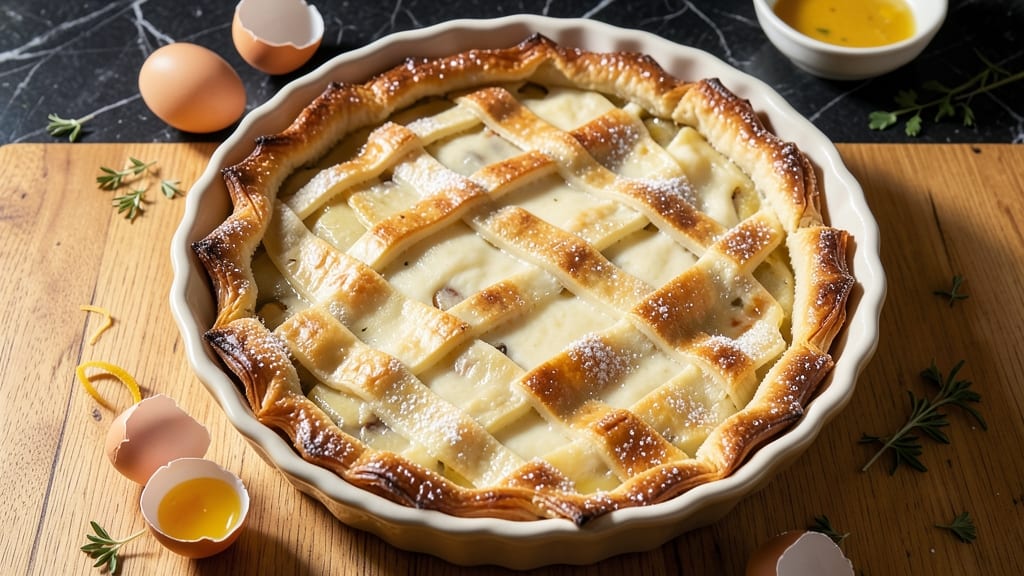
This potato custard pie recipe delivers the perfect balance of creamy spiced filling and flaky golden crust—no one will guess it's made with humble potatoes. The secret lies in slow-cooked mashed potatoes blended with rich custard and warm spices, creating a velvety texture that's both comforting and sophisticated.
I've perfected this recipe over years of holiday baking, ensuring every slice stays moist and never dry.
The foundation starts with a classic pie crust rolled out to 1/8-inch thickness—this ensures a tender base that won't overpower the filling. For the filling, potatoes are boiled until tender, then mashed smooth before blending with eggs, cream, and a touch of nutmeg and cinnamon.
The key is baking at 350°F for 50-60 minutes, allowing the crust to golden while the custard sets to perfection.
What makes this pie truly special is how the flavors develop during baking—the spices mellow into a warm, aromatic finish while the custard thickens just enough to hold its shape.
The result is a slice with a flaky crust crown, creamy potato custard, and subtle spice notes that make it taste like a homey dessert straight from a family gathering.
Perfect for holiday feasts or cozy family dinners, this pie keeps beautifully for up to 3 days when stored properly. The recipe scales easily for crowds, and the filling can even be pre-baked for convenience. Here's how to assemble it step by step for foolproof results every time.
Ingredients for potato custard pie
Six ingredients for the crust, nine for the filling—simple staples that transform into a showstopping holiday dessert.
| Ingredient | Amount | Notes |
|---|---|---|
| Russet Potatoes 🥔 | 3 lb | Peeled, boiled until tender |
| All-Purpose Flour 🌾 | 2 ½ cups | For pie crust, plus 1 tbsp for rolling |
| Unsalted Butter 🧈 | 1 cup | Cold, cubed for crust |
| Large Eggs 🥚 | 4 whole | Room temperature for custard |
| Heavy Cream 🥛 | 1 ½ cups | Full-fat for richness |
| Granulated Sugar 🍚 | ½ cup | Adjust to taste |
| Ground Nutmeg 🌿 | ½ tsp | Freshly grated preferred |
| Ground Cinnamon 🌶️ | 1 tsp | Toasted for deeper flavor |
| Salt 🧂 | ½ tsp | Kosher or sea salt |
| Ice Water ❄️ | ½ cup | For pie dough |
| Vanilla Extract 🌸 | 1 tsp | Pure vanilla preferred |
| Cornstarch 🌾 | 2 tbsp | For thickening custard |
The potatoes are the heart of this pie, so Russet is the way to go—they're starchy and hold up beautifully when boiled. Organic potatoes from the grocery store work fine, but if you can find them, farm-fresh potatoes have more flavor. For the crust, King Arthur flour or Bertolli all-purpose flour gives the best texture, but any high-quality flour will do. Keep the butter cold for a flaky crust—don't let it soften before mixing. The custard relies on room-temperature eggs for smooth blending, so take them out of the fridge 30 minutes before using.
No heavy cream? Half-and-half plus a splash of milk works in a pinch, though the texture won't be quite as rich. Running short on nutmeg? Allspice at half the amount gives a similar warmth, but nutmeg is classic here. For the crust, if you don't have ice water, chilled vodka or lemon juice works just as well to keep the dough tender. Prefer a sweeter pie? Add an extra 2 tbsp of sugar to the filling. The cornstarch is crucial for preventing a gummy texture—don't skip it, even if your potatoes seem extra-starchy.
This pie tastes even better the next day, so bake it ahead if you can. Store it at room temperature for up to 2 days, or refrigerate for 3-4 days if you're prepping for a big gathering. To reheat, warm slices in a 350°F oven for 10 minutes—the crust stays crisp, and the custard melts just enough to feel warm and comforting. Leftovers freeze beautifully too—just wrap the whole pie tightly in plastic wrap and foil for up to 3 months.
Why You'll Love This Recipe
- No Fuss Setup: I swear, this pie only needs five ingredients—no fancy techniques, no last-minute grocery runs. You’ll boil potatoes, mash them, and mix in butter, eggs, and cream while the oven preheats. Honestly, it’s the kind of recipe that makes me feel like a home cook, not a chef.
- Silky Creamy Magic: That custard filling? Chef’s kiss. The heavy cream and eggs blend into a velvety texture, while the potatoes add just enough heartiness to keep it satisfying. Between us, the first bite always makes me wonder why I don’t make this more often.
- Weeknight to Holiday: I’ve served this at family dinners, potlucks, and even as a lazy Sunday breakfast. The crust (if you use one) can be store-bought or homemade—no judgment either way. It’s the kind of dish that works when you’re feeding two or ten, and no one will guess it took less than an hour.
- Budget-Friendly Leftovers: Russets are cheap, eggs are cheap, and this pie actually tastes better the next day. I’ll be real: I’ve reheated slices for breakfast with a sprinkle of cheese, and my kids still beg for it. It’s my secret weapon for stretching groceries without sacrificing flavor.
Step-by-step instructions for potato custard pie with golden crust
Mastering this recipe delivers a perfect balance of flaky crust and velvety custard filling every time.
Prepare the Pie Crust
In a large bowl, combine the 2.5 cups all-purpose flour with 0.5 teaspoon salt. Cut in the 1 cup cold, cubed unsalted butter using a pastry cutter or your fingers until the mixture resembles coarse crumbs with pea-sized butter pieces. This texture is crucial—it ensures flaky layers rather than dense dough.
Gradually add the 0.5 cup ice water, 1 tablespoon at a time, mixing gently with a fork until the dough just comes together. Avoid overmixing. Shape into a disk, wrap in plastic wrap, and refrigerate for at least 1 hour. This chilling period firms up the fat, making rolling easier and preventing shrinking during baking.
Make the Potato Custard Filling
Peel and boil the 3 lb russet potatoes until fork-tender, about 15-20 minutes. Drain well and let cool slightly before mashing them thoroughly in a large bowl. The potatoes should be completely smooth with no lumps—this ensures a silky custard texture.
In a separate bowl, whisk together the 4 whole large eggs, 1.5 cups heavy cream, 0.5 cup granulated sugar, 0.5 teaspoon ground nutmeg, 1 teaspoon ground cinnamon, 0.5 teaspoon salt, 1 teaspoon vanilla extract, and 2 tablespoons cornstarch. Slowly incorporate this mixture into the mashed potatoes, whisking constantly to prevent lumps. The batter should be thick but pourable—this consistency is perfect for creating that signature creamy texture.
Assemble and Bake the Pie
Preheat your oven to 375°F. On a lightly floured surface, roll out the chilled pie dough to a 12-inch circle, about 1/8-inch thick. Transfer it to a 9-inch pie dish, trimming any excess dough. Press gently to form the sides, then crimp the edges with a fork or your fingers for a decorative finish.
Pour the potato custard mixture into the prepared crust, spreading it evenly. Bake for 50-55 minutes until the filling is set and the crust is golden brown. The center should jiggle slightly when shaken, but it should no longer be wobbly. If the top browns too quickly, tent loosely with foil after 30 minutes to prevent over-browning while ensuring the filling cooks through.
Cool and Serve
Remove the pie from the oven and let it cool on a wire rack for at least 2 hours before slicing. This resting period allows the custard to fully set and prevents it from becoming runny. The contrast between the warm, spiced custard and the crisp crust is what makes this pie truly special.
Serve at room temperature for the best texture—each slice should reveal a golden, flaky crust surrounding a velvety, lightly spiced potato custard. The nutmeg and cinnamon should be subtly aromatic, enhancing the natural sweetness of the potatoes without overpowering them. Enjoy immediately for the ultimate experience!
Pro Tips For Making Potato Custard Pie
- BOIL POTATOES UNTIL TENDER: Russets should fall apart with a fork—not just soften—when tested. I used to pull them at 15 minutes, but they’re still mealy inside. Boil them 20-25 minutes until a knife slides through like butter. Drain well, then mash while hot to break down the starch properly.
- WHISK EGGS COLD: Warm eggs in the custard mix? Big mistake. Whisk them straight from the fridge into the cold cream mixture first—this prevents curdling. My grandmother swore by this, and she was right: the custard stays silky, not grainy.
- BAKE COOL, NOT HOT: Skip preheating the oven to 350°F (175°C) with a hot custard filling—it’ll set too fast on top while staying raw inside. Let the filling cool to room temp for 10 minutes first, then bake. The center will come together smoothly, not split.
- USE BUTTER AT ROOM TEMP: Cold butter lumps in the custard, and melted butter can make the filling separate. Take it out 30 minutes before mixing—just soft enough to press but not greasy. This ensures a velvety texture, not a greasy one. (Yes, even if you’re impatient like me.)
Common mistakes when making perfect results
Overmixing the Dough
I can't stress enough how tempting it is to fully incorporate that last bit of water into your pie dough, but resist! Overmixing develops gluten, which leads to a tough, chewy crust instead of the delicate, flaky layers we want.
Stop mixing as soon as the dough just comes together—it should look shaggy with a few dry spots. I've ruined more crusts than I'd like to admit by overworking the dough, so trust the process and keep your hands out of it after that point. 🥧
Skipping the Chill
Rushing the 1-hour chill time is a recipe for disaster. Cold butter is essential for flaky layers, and skipping the rest prevents the dough from firming up properly. When you roll out unchilled dough, it shrinks dramatically in the pie dish, creating thick edges and thin centers.
I learned this the hard way during my first holiday baking attempt—now I set a timer and make myself wait. The extra time prevents a soggy bottom and ensures even baking.
Undercooked Potatoes
If your potatoes aren't fully tender when you mash them, you'll end up with a gritty, uneven texture in your custard. Test doneness by piercing with a fork—it should slide in easily with no resistance.
I've had to start over when potatoes were undercooked because the filling turned lumpy and watery. For extra insurance, boil them in salted water and check after 15 minutes—they should collapse easily when pierced. 🥔
Overbaking the Filling
The custard should jiggle slightly when the pie comes out of the oven—this is normal! Overbaking dries out the filling and creates a rubbery texture. I've seen home cooks bake until the center looks completely set, only to discover a dense, unappetizing result.
Remove the pie when the edges are set but the center still has gentle movement. If you're unsure, insert a knife near the center—it should come out clean but slightly moist, not dry.
Using Warm Eggs
Room-temperature eggs are crucial for a smooth custard mixture. Cold eggs create lumps that don't dissolve, leading to an uneven texture in your filling. I always take my eggs out of the fridge 30 minutes before using them—this simple step makes all the difference.
If you forget, whisk them vigorously with a splash of warm water to help them blend properly. The result is a velvety, lump-free filling that sets beautifully.
Neglecting the Resting Time
Cutting into the pie too soon is a cardinal sin. The custard needs 2 hours to fully set, and slicing early releases all that delicious filling too quickly, making it runny. I've had guests complain about "watery pie" when I didn't wait long enough—now I always set a reminder.
The crust also needs time to crisp up properly. Serve at room temperature for the perfect balance of textures and flavors. 💫
Nutrition facts
Frequently asked questions about potato custard pie
Can I use sweet potatoes instead of russet potatoes?
Sweet potatoes will work, but they'll change the flavor profile significantly. Sweet potatoes have a naturally sweeter, earthier taste that pairs differently with the custard and spices. For best results, stick with russets—their neutral flavor lets the warm spices and cream shine. If you must use sweet potatoes, reduce the sugar in the filling by 2 tbsp to balance their natural sweetness.
Why did my pie filling turn watery?
Watery filling usually means one of two things: either your potatoes weren't fully cooked (they released too much moisture) or your custard wasn't thickened enough. First, ensure potatoes are fork-tender before mashing. Second, make sure you're using the full 2 tbsp cornstarch—this is non-negotiable for proper thickening. If it still happens, try adding 1 tbsp more cornstarch to your egg mixture next time.
Can I make this pie ahead of time?
This pie actually tastes better after resting. Bake it a day ahead and store at room temperature for up to 2 days—the flavors meld beautifully. For longer storage, refrigerate for 3-4 days or freeze for up to 3 months. To serve from frozen, thaw overnight in the fridge, then reheat slices in a 350°F oven for 10 minutes to refresh the crust.
What's the secret to a flaky crust?
The secret lies in three things: cold butter, minimal handling, and proper chilling. Use cold cubed butter (not softened) and cut it into the flour until it's pea-sized pieces. Work the dough just until it comes together, then chill for at least 1 hour. This prevents gluten development and ensures those perfect flaky layers. Never skip the chill—it's non-negotiable for a tender crust!
Can I substitute cream cheese for heavy cream?
You can try, but the texture will be different. Cream cheese adds richness but makes the custard denser. For best results, replace 1 cup of heavy cream with 4 oz softened cream cheese mixed with 1/4 cup milk to maintain the proper consistency. The flavor will be slightly tangier, but the pie will still be delicious—just expect a slightly firmer texture.