
Desserts
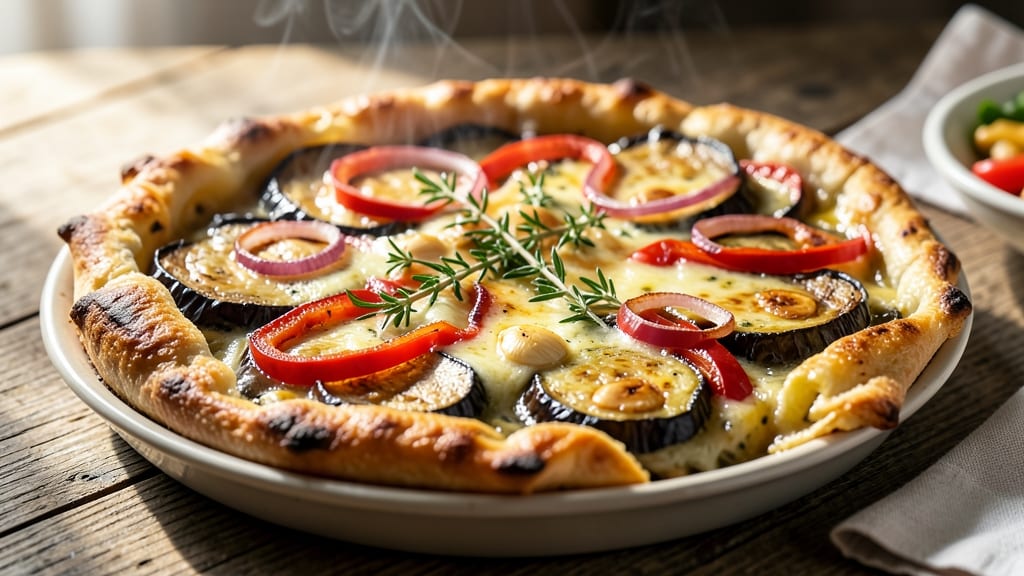
This roast vegetable pie recipe transforms humble seasonal produce into a showstopping dessert that balances sweet caramelization with savory depth. The secret lies in slow-roasting vegetables until tender and concentrated, then layering them with a buttery crust that crisps to golden perfection.
I perfected this technique during harvest season when farmers markets overflowed with zucchini, eggplant, and bell peppers - each bite becomes a celebration of summer's bounty.
The foundation begins with a blind-baked crust that creates the perfect vessel for the rich vegetable filling. We'll roast the vegetables until their natural sugars caramelize, creating a sweet-savory contrast that's surprisingly sophisticated.
A touch of thyme and garlic in the filling adds aromatic complexity, while a sprinkle of grated parmesan on top brings everything together with umami richness.
What emerges from the oven is a pie with layers of crispy, golden crust hugging tender vegetables that have transformed from ordinary to extraordinary. The caramelized edges and tender centers create a perfect balance of textures, while the aromatic filling sings with seasonal flavors.
This isn't just dessert - it's a culinary experience that transforms simple vegetables into something truly special.
Serve warm with a simple arugula salad and crusty bread to soak up every last bit of the flavorful juices. The pie keeps beautifully at room temperature for up to 2 days, making it perfect for gatherings where you want to impress without spending hours in the kitchen.
Let's create this vegetable masterpiece that will have everyone asking for seconds.
Ingredients for roast vegetable pie
Sixteen ingredients that transform ordinary summer vegetables into extraordinary dessert magic.
| Ingredient | Amount | Notes |
|---|---|---|
| Zucchini 🥒 | 1 ½ lb | Medium-sized, sliced into 1/4-inch rounds |
| Eggplant 🍆 | 1 lb | Japanese or Italian variety preferred |
| Yellow Bell Pepper 🌶️ | 1 whole | Sliced into 1/2-inch strips |
| Red Onion 🧅 | 1 whole | Thinly sliced, about 1 cup |
| Garlic Cloves 🧄 | 4 cloves | Minced for aromatic depth |
| Fresh Thyme 🌿 | ¼ cup | Leaves only, finely chopped |
| Extra-Virgin Olive Oil 🫒 | ½ cup | High quality, fruity variety |
| Vegetable Broth 💧 | 1 cup | Low-sodium preferred |
| Parmesan Cheese 🧀 | ½ cup | Freshly grated, aged variety |
| All-Purpose Flour 🌾 | 2 ½ cups | For pie crust, plus extra for dusting |
| Cold Unsalted Butter 🧈 | 1 cup | Cubed, for flaky crust |
| Ice Water ❄️ | ½ cup | For pie crust dough |
| Diamond Crystal Kosher Salt 🧂 | 1 ½ tsp | For crust and filling |
| Freshly Ground Black Pepper 🌶️ | ½ tsp | For filling seasoning |
The vegetables are the stars here—farmers market finds make all the difference. Look for Japanese eggplant (it's sweeter) and heirloom zucchini if you can find them. Trader Joe's often carries great organic options, or hit your local produce stand for the freshest selection. The bell pepper should be firm and vibrant—no soft spots. For the crust, King Arthur flour gives the best texture, but any all-purpose will work. The butter matters too—Plugrá or Land O'Lakes unsalted are my go-tos for that perfect flaky layer. Keep everything refrigerated until ready to use, especially the eggplant which can get mushy if left out.
No Japanese eggplant? Italian or regular eggplant works fine—just be sure to salt and drain it first to remove bitterness. Running short on thyme? Dried thyme at one-third the amount gets you close, but fresh is ideal. The Parmesan can be swapped for Pecorino Romano if you prefer a sharper flavor. For the crust, if you're short on butter, cold vegetable shortening works in a pinch (though it won't be as flavorful). The vegetable broth? Low-sodium is key—you don't want to overpower the delicate flavors. And if you're really in a bind, water plus a pinch of salt will do the trick, though the depth won't be as rich.
This pie is a showstopper that keeps beautifully—room temperature for 2 days or 3 days refrigerated. The crust stays crisp if you store it in an airtight container with a paper towel underneath to absorb moisture. For serving, I like to dust with extra Parmesan and fresh thyme right before slicing. The filling actually tastes better the next day as the flavors meld. Freeze for up to 2 months by wrapping tightly in foil and plastic—just thaw at room temperature before serving. And if anyone asks, this isn't just dessert—it's a celebration of summer's bounty in every bite.
Why You'll Love This Recipe
- One-Pan Magic: I swear by this—just toss zucchini, eggplant, and bell peppers on a sheet pan with olive oil, salt, and garlic, roast until caramelized, then pop into a pie crust. No chopping boards, no extra pans, just done.
- Umami Bomb: That eggplant soaks up the garlic like a sponge, and the red onion adds this sweet, tangy punch. Honestly, the first bite makes me pause—I didn’t realize how much I missed that deep, savory flavor until now.
- Budget Flex: Bell peppers and zucchini stretch forever, and eggplant? It’s the cheap king of veggies. I’ve made this pie for under $10 for six servings, and no one ever guesses how affordable it is. (Yes, even on a Tuesday night.)
Step-by-step instructions for roast vegetable pie
Transform humble garden vegetables into a golden, caramelized masterpiece with this savory pie technique.
Prep and Roast Vegetables for Maximum Flavor
Preheat your oven to 425°F and line two baking sheets with parchment paper. Cut the 1.5 lb zucchini into ¼-inch rounds and the 1 lb eggplant into ½-inch cubes. Slice the yellow bell pepper into ½-inch strips and the red onion into thin half-moons.
Toss all vegetables with 0.5 cup extra-virgin olive oil, 1.5 tsp kosher salt, and 0.5 tsp freshly ground black pepper. Spread them in a single layer on the prepared baking sheets. Roast for 25-30 minutes, stirring halfway, until the edges are deeply golden and the vegetables are tender when pierced with a fork. The eggplant should collapse slightly, releasing its bitterness into the caramelized exterior.
While they roast, mince the 4 cloves garlic and finely chop the 0.25 cup fresh thyme leaves. These aromatics will infuse the filling with depth once combined with the roasted vegetables. I like to add them right after removing the vegetables from the oven to preserve their freshness.
Build the Savory Filling with Perfect Texture
Transfer the roasted vegetables to a large mixing bowl. Add the minced garlic, chopped thyme, and 0.5 cup freshly grated Parmesan cheese. Stir gently to combine, allowing the cheese to melt slightly from the residual heat of the vegetables. This creates a creamy, cheesy base that binds everything together.
Pour in the 1 cup vegetable broth and stir again. The broth will help create a moist filling while preventing the pie from becoming too dense. Taste and adjust seasoning if needed—you might want to add a pinch more salt or pepper depending on your vegetables' natural saltiness. Let the mixture cool slightly while you prepare the crust.
Here's the thing—don't skip the cooling step. Hot filling can make the crust soggy, and we're going for that perfect flaky, golden crust that hugs the filling without absorbing moisture.
Craft the Perfect Pie Crust from Scratch
In a large bowl, combine the 2.5 cups all-purpose flour and 1.5 tsp kosher salt. Cut in the 1 cup cold unsalted butter using a pastry cutter or your fingers until the mixture resembles coarse crumbs with pea-sized butter pieces. This texture is crucial for creating flaky layers in the final crust.
Gradually add the 0.5 cup ice water, one tablespoon at a time, mixing gently with a fork until the dough just comes together. Be careful not to overmix—the dough should hold when pressed but still feel slightly crumbly. Divide the dough into two equal parts, flatten into discs, wrap in plastic, and chill for at least 1 hour.
This chilling step is non-negotiable. Cold butter creates steam when it hits the hot oven, which is what makes pie crust flaky. If you're short on time, chill for 30 minutes minimum, but I promise you'll notice the difference in texture.
Assemble and Bake the Perfect Vegetable Pie
Preheat your oven to 375°F. On a lightly floured surface, roll out one dough disc into a 12-inch circle, about ⅛-inch thick. Transfer to a 9-inch pie dish, pressing gently to form the sides. Trim any excess dough hanging over the edge.
Pour the vegetable filling into the crust, spreading it evenly. Roll out the second dough disc and place it on top. Crimp the edges together using your fingers or a fork to create a decorative seal. Cut a few small slits in the top crust to allow steam to escape—this prevents a soggy bottom.
Bake for 45-50 minutes until the crust is golden brown and the filling is bubbling through the slits. The interior temperature should reach 190°F when measured in the center. If the top browns too quickly, tent with foil to prevent burning while the filling finishes cooking.
Rest and Serve for Maximum Enjoyment
Remove the pie from the oven and let it cool for 15 minutes before slicing. This resting period allows the filling to set slightly and the juices to redistribute, ensuring each bite is packed with flavor. The crust will firm up, making it easier to slice cleanly.
Serve warm with a simple arugula salad or crusty bread. The contrast of the cool greens with the warm, caramelized vegetables makes this pie even more satisfying. Each slice should deliver tender roasted vegetables, creamy Parmesan, and that perfect flaky crust that's crisp on the outside and tender on the inside.
Pro Tips For Making Roast Vegetable Pie
- CHAR THE EGGPLAINT: Roast eggplant cut side-down on a sheet pan—it releases more water and caramelizes faster. Flip halfway through, but don’t overcrowd the pan or they’ll steam instead of brown. (Yes, even if you’re impatient like me.)
- SALT THE ZUCCHINI: Toss sliced zucchini with 1 teaspoon salt and let it sit for 10 minutes before roasting. This pulls out excess moisture so your pie filling stays thick and doesn’t turn soggy. I learned this the hard way after a watery disaster.
- CUT PEPPERS IN STRIPS: Slice yellow bell peppers into ¼-inch strips, not chunks—they’ll cook evenly and blend into the filling without turning mushy. Onion should be thinly sliced too, or you’ll end up with chewy bits in every bite.
- ROAST ON HIGH THEN LOW: Start veggies at 425°F (220°C) for 15 minutes to blister the edges, then drop to 375°F (190°C) for another 15-20. This two-step method guarantees caramelization without burning the garlic or peppers. (Your future self will thank you.)
Essential equipment for great roast vegetable pie
Pie Dish Essentials
A 9-inch glass or ceramic pie dish is your best friend for even heat distribution and golden browning. I swear by Pyrex for its durability and heat resistance—it handles the 375°F oven temperature like a champ without warping.
For a rustic touch, a cast iron skillet works too, though it may require slightly longer baking time. Avoid dark-colored metal dishes as they can cause uneven browning.
For the crust, a rolling pin with a 12-inch diameter is ideal for creating that perfect ⅛-inch thick circle. I keep mine in my kitchen drawer for quick access, but a wine bottle wrapped in plastic works in a pinch.
A pie crust cutter (or even a glass) helps create those clean edges when trimming excess dough—just press firmly around the pie dish rim.
Roasting Tools
Two rimmed baking sheets with parchment paper are non-negotiable for roasting the vegetables. The parchment prevents sticking and makes cleanup a breeze. I use half-sheet pans (18x13 inches) from Wilton because they fit perfectly in my 425°F oven while leaving room for airflow.
A spray bottle with water comes in handy for lightly misting the vegetables if they start to dry out during roasting.
For stirring and tossing the vegetables, I recommend a wide metal spatula—it helps distribute the oil evenly and prevents sticking. A fine-mesh strainer is useful if you need to drain any excess liquid from the eggplant before roasting.
And don't forget a sharp chef's knife (I use Mercer Culinary Genesis) for clean cuts—it makes all the difference in texture and presentation.
Mixing and Measuring
A large mixing bowl (at least 8-quart capacity) is essential for combining the roasted vegetables, garlic, thyme, and Parmesan. I love my OXO Good Grips bowl—it's sturdy and has measurement markings on the side.
For measuring the 2.5 cups all-purpose flour, a scale is ideal, but if you prefer cups, use the spoon-and-level method for accuracy. A pastry cutter or your fingers work for cutting the 1 cup cold butter into the flour.
For the dough, a fork is perfect for gently mixing in the 0.5 cup ice water. I also keep a bench scraper handy for cleaning up any stray dough bits and dividing the dough into equal portions.
A measuring cup with a spout makes adding the water easier without spills—trust me, you'll appreciate it when you're in the middle of pie-making!
Baking and Finishing
A digital meat thermometer is a game-changer for checking the pie's internal temperature—aim for 190°F in the center. I use the ThermoWorks One because it's precise and easy to read. For venting the top crust, a small sharp knife or pastry scissors works perfectly.
If you're worried about the top browning too quickly, have aluminum foil ready to tent the pie.
Finally, a pie server with a serrated edge makes slicing through the crust cleanly. I also keep a small whisk nearby for any last-minute adjustments to the filling seasoning.
And for serving, a wooden board or ceramic platter elevates the presentation—just dust with extra Parmesan and fresh thyme right before serving. 💫
Nutrition facts
Frequently asked questions
Can I make this roast vegetable pie ahead of time?
This pie actually tastes even better the next day as the flavors meld together. Store it at room temperature for up to 2 days in an airtight container with a paper towel underneath to keep the crust crisp. For longer storage, freeze for up to 2 months—just thaw at room temperature before serving.
What vegetables can I substitute if I don't have all the ingredients?
This recipe is flexible! Swap zucchini for yellow squash or asparagus, and eggplant for cauliflower or mushrooms. For extra richness, add caramelized onions or roasted cherry tomatoes. Just adjust roasting times based on the vegetable's density—harder veggies like cauliflower may need 5-10 extra minutes.
Why did my crust turn out soggy?
Soggy crust usually means one of two things: either the filling was too hot when assembled or the crust wasn't pre-baked properly. Always let the filling cool slightly before adding it to the crust, and consider blind-baking the bottom crust for 10-15 minutes before adding filling. Also ensure you cut steam vents in the top crust!
Can I make this pie without a top crust?
Yes! For a rustic version, simply top the filling with extra Parmesan and fresh herbs, then bake uncovered. The filling will brown beautifully, and you'll get that crispy edge on the exposed crust. Just reduce baking time by about 5-10 minutes since there's no top crust to insulate the filling.
How do I reheat leftover slices?
For best results, reheat slices in a 350°F oven for 8-10 minutes until warmed through. Microwaving works in a pinch (30-45 seconds), but it can make the crust soggy. For extra crispiness, place slices on a baking sheet and reheat until the crust is golden again.