
Main Courses
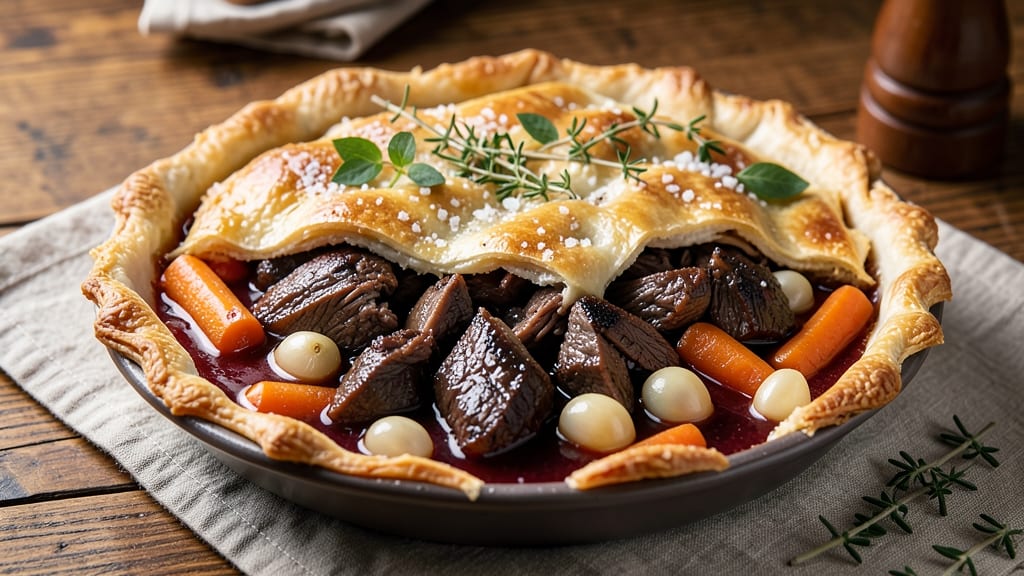
This slow cooked beef pie recipe transforms tough cuts into melt-in-your-mouth beef swimming in rich gravy, all encased in a golden, hand-stretched pastry. The secret lies in low-and-slow cooking that tenderizes the meat while developing deep, savory flavors—no rushed shortcuts here.
This isn't just pie; it's a showstopping centerpiece that combines traditional techniques with restaurant-quality results.
The process begins with slow-cooking beef in a flavorful broth until fork-tender, then thickening it into a velvety gravy that becomes the heart of the pie. Meanwhile, a homemade pastry (or high-quality store-bought dough) stretches to a paper-thin crust, ensuring every bite delivers both texture and flavor.
Blind baking the crust creates a sturdy foundation that holds up to the weight of the filling without sogginess.
What you'll achieve is a pie with a crisp, golden crust that flakes effortlessly, a filling of perfectly cooked beef in a glossy gravy, and a presentation that looks as impressive as it tastes.
The aroma alone will have everyone gathering at the table, while the first bite delivers layers of savory, herby, and slightly sweet flavors that define comfort food at its finest.
Serve with a simple green salad or buttered peas to balance the richness, or let the pie stand alone as the star of your meal. This recipe delivers on tradition while making it accessible—no pie-making experience required. Let's get started on creating your masterpiece.
Ingredients for slow cooked beef pie
Sixteen ingredients for a showstopping pie that transforms tough beef into melt-in-your-mouth perfection.
| Ingredient | Amount | Notes |
|---|---|---|
| Beef Chuck Roast 🥩 | 3 lb | Tough cut for slow cooking |
| All-Purpose Flour 🌾 | 2 cups | For gravy thickening |
| Unsalted Butter 🧈 | ½ cup | Cold for pastry making |
| Beef Broth 💧 | 2 cups | Homemade or quality store-bought |
| Red Wine 🍷 | ½ cup | Bold dry variety preferred |
| Carrots 🥕 | 1 lb | Peeled and sliced into chunks |
| Yellow Onion 🧅 | 1 whole | Diced for aromatics |
| Fresh Thyme 🌿 | 2 tbsp | Leaves only, chopped fine |
| Fresh Rosemary 🌿 | 1 tbsp | Needles only, chopped |
| Garlic Cloves 🧄 | 6 cloves | Peeled and smashed |
| Salt 🧂 | 1 ½ tsp | Diamond Crystal preferred |
| Black Peppercorns 🌶️ | 1 tsp | Freshly cracked |
| All-Purpose Flour 🌾 | 4 cups | For pie crust |
| Lard or Shortening 🧈 | 1 cup | For flaky texture |
| Ice Water 💧 | ½ cup | For dough binding |
The beef is non-negotiable—chuck roast with good marbling is your secret weapon. Ask the butcher for pre-cubed chuck if you're short on time, or buy a whole roast and cut it yourself for better texture. Costco or Whole Foods have reliable cuts, but any grocery store's meat department will work. Look for bright red meat with visible fat marbling—this ensures tenderness. For the herbs, fresh is best, but if you're in a pinch, dried thyme and rosemary at half the amount will do. The carrots should be firm and vibrant orange—no limp or bruised ones. Store your beef in the coldest part of the fridge, and use it within 3 days for best results.
No red wine? Substitute with extra beef broth, but add a splash of balsamic vinegar for depth. The pie crust can be made ahead and stored in the fridge for 3 days or frozen for 3 months. For the gravy, if you're using all-purpose flour, make sure it's sifted first to avoid lumps. The butter for the crust should be cold—pop it in the freezer for 15 minutes if it's too soft. Want to make this gluten-free? Swap the all-purpose flour for a 1:1 gluten-free blend, but expect a slightly different texture. The pie dough can be rolled out with a rolling pin or wine bottle—whatever you've got on hand.
This pie tastes even better the next day as the flavors meld together. Store leftovers in an airtight container for up to 4 days in the fridge, or freeze portions for 3 months. To reheat, cover with foil and bake at 350°F for 20 minutes. The crust will crisp up beautifully. For a restaurant-worthy presentation, brush the crust with a little egg wash (1 egg + 1 tbsp water) before baking. If you're making the dough ahead, let it rest in the fridge for at least 1 hour before rolling—this makes it much easier to handle.
Why You'll Love This Recipe
- Hands-Off Magic: I swear by this recipe when I’ve got better things to do than stand over a stove. Toss the chuck roast in the slow cooker with wine and broth, then let it do its thing—no stirring, no stress, just melt-in-your-mouth beef by dinner.
- Rich, Deep Layers: That red wine and beef broth combo? It’s like a flavor bomb. The crust seals in all the juices, so every bite has that perfect mix of tender beef and a savory, slightly tangy sauce—no dry, sad meat here.
- Weeknight to Party Fix: Same recipe, totally different vibes. Serve it with mashed potatoes for a lazy Sunday, or dress it up with roasted veggies for a dinner party. Honestly, I’ve pulled this off for both—no one ever questions the menu.
- Leftovers? More Like Leftovers Win: This pie is that good that I’ll make it just to reheat it later. The crust stays crisp, the beef stays juicy, and it’s basically a free meal for the next two days. Budget win, time win, taste win.
Step-by-step instructions for slow cooked beef pie
Here's how to create a showstopping beef pie with tender beef and flaky pastry.
Prepare the Beef Filling for Slow Cooking
Pat the 3 lb Beef Chuck Roast dry with paper towels and season generously with 1.5 tsp Salt and 1 tsp freshly cracked Black Peppercorns. This seasoning will penetrate deeply during the slow cook. In a large Dutch oven, melt the 0.5 cup Unsalted Butter over medium heat until foaming, then add the beef and sear on all sides until browned—about 5 minutes per side. This step builds deep flavor through the Maillard reaction.
Remove the beef and set aside. In the same pot, add 1 lb sliced Carrots, 1 diced Yellow Onion, 6 smashed Garlic Cloves, 2 tbsp chopped Fresh Thyme, and 1 tbsp chopped Fresh Rosemary. Sauté for 5 minutes until the vegetables soften slightly. Pour in the 0.5 cup Red Wine and scrape up any browned bits from the bottom—this captures all the flavor. Let it simmer for 2 minutes until reduced by half.
Slow Cook the Beef in Rich Gravy
Return the beef to the Dutch oven and add 2 cups Beef Broth. Bring to a simmer, then cover and transfer to a preheated 325°F oven. Cook for 3 hours, or until the beef is fork-tender. Here's the thing—don't peek! Every time you open the lid, you lose heat and moisture, extending cook time. The beef should be so tender it nearly falls apart when pierced with a fork.
While the beef cooks, prepare the gravy. Remove the beef and strain the cooking liquid into a saucepan. Whisk in 2 cups All-Purpose Flour to create a roux. Cook over medium heat for 3-5 minutes, stirring constantly, until thickened to a velvety consistency. The gravy should coat the back of a spoon smoothly—this ensures it'll cling beautifully to the beef when reassembled.
Create the Flaky Pie Crust
In a large bowl, combine the 4 cups All-Purpose Flour, 1.5 tsp Salt, and cut the 0.5 cup Unsalted Butter into small pieces. Use your fingers to work the butter into the flour until you have pea-sized crumbs. Add the 1 cup Lard or Shortening and mix until the dough resembles coarse sand. This fat distribution is what creates that signature flaky texture.
Gradually add the 0.5 cup Ice Water while mixing with a fork until the dough just comes together. Don't overwork it—just until it holds when pressed. Shape into a disk, wrap in plastic, and chill for 1 hour. Chilling firms up the fat, preventing the crust from shrinking during baking. I like to roll out the dough between two sheets of parchment paper to prevent sticking.
Assemble and Bake the Pie
Preheat your oven to 375°F. Roll out the chilled dough to fit your pie dish with about 1 inch overhang. Transfer the beef and gravy to the pie dish, then carefully drape the dough over the top. Trim the excess dough and crimp the edges with a fork or your fingers. Cut a few small slits in the center to allow steam to escape—this prevents a soggy bottom.
Bake for 45-50 minutes until the crust is deep golden brown and the filling bubbles through the slits. The crust should be crisp and the filling hot. Let the pie rest for 15 minutes before serving—this allows the filling to set slightly and makes slicing cleaner. The aroma alone will have everyone gathering around your table!
Pro Tips For Making Slow Cooked Beef Pie
- Brown the Chuck First: I learned this the hard way—skipping the sear means flavorless beef. Get that roast screaming hot in a Dutch oven with oil, then brown all sides until deep golden. The crust locks in juices and builds depth that beef broth alone can’t match.
- Deglaze with Wine: That red wine isn’t just for flavor—it’s your cleanup crew. After browning the beef, pour in the wine immediately while the pan’s still hot. Let it bubble for 2 minutes to scrape up all those browned bits (the fond). You’re not just adding alcohol; you’re dissolving flavor.
- Don’t Rush the Broth: I used to add broth early, but the beef needs time to render fat first. After browning, let the roast sit in the Dutch oven for 5 minutes off the heat—this lets juices redistribute. Then add broth after the wine deglazes, or you’ll dilute the sauce too soon.
- Patch the Crust Early: The pie crust’s weak spot is the top. After 2 hours of slow cooking (325°F), open the oven and patch any cracks with a bit of water and extra flour. Press it down gently—it’ll bake up flaky, not soggy. (Yes, even if it looks messy.)
Common mistakes when making great slow cooked beef pie
Overcooking the Beef
Slow cooking is all about patience, but many people rush the process by checking the beef too early or cooking it too long. The beef should reach 203°F internal temperature and become fork-tender in about 3 hours—not bone-dry.
Overcooked beef loses moisture and flavor, resulting in a dry, stringy filling. I’ve learned the hard way: set a timer and resist the urge to peek! The lid keeps the moisture trapped, so trust the process. 🌡️
Skipping the Blind Bake
One of the biggest mistakes is skipping the blind bake for the crust. Without pre-baking, the bottom of your pie will absorb the filling’s moisture, turning soggy instead of golden and crisp.
To avoid this, I always line the crust with parchment paper, fill it with pie weights or dried beans, and bake at 375°F for 15 minutes before adding the filling. This step is non-negotiable for a perfect crust. ⚠️
Using the Wrong Fat
The type of fat in your pie crust makes all the difference. Butter alone can make the crust tough, while lard or shortening creates flakiness. I recommend using half butter and half lard for the best texture.
If you’re using only butter, chill it thoroughly and cut it into small pieces for even distribution. The goal is to create layers that melt during baking, creating those signature flaky layers. 🧈
Not Resting the Dough
If you roll out the pie dough immediately after mixing, it will shrink and tear when you try to fit it into the pie dish. Always chill the dough for at least 1 hour before rolling. This firms up the fat and makes the dough easier to handle.
Pro tip: Wrap the dough in plastic wrap and press it flat in the fridge for even better results. Patience here prevents a messy assembly! ⏰
Overfilling the Pie
An overfilled pie will burst during baking, creating a mess and ruining your presentation. The filling should come about ¾ of the way up the sides of the pie dish, leaving room for the crust to expand.
If your filling is too thick, spread it out evenly and chill the pie for 30 minutes before baking to help it settle. Trust me, a slightly underfilled pie is always better than a disaster! 🚫
Ignoring the Crimp
A poorly sealed crust can lead to filling leaks or a soggy bottom. Instead of just tucking the edges, use a fork or your fingers to create a decorative crimp. This not only looks professional but also seals the pie tightly.
For extra security, brush the edges with a little beaten egg to help them stick together during baking. A well-crimped edge is the difference between a homemade pie and a restaurant-worthy one. ✨
Nutrition facts
Frequently asked questions
Can I use ground beef instead of a roast?
Not for this recipe! The slow-cooked beef pie relies on tough cuts like chuck roast that become tender and flavorful through long cooking. Ground beef would release too much moisture and lack the rich, meaty texture. If you're set on ground beef, try a different recipe like a shepherd's pie instead.
How do I make this pie ahead of time?
This pie actually tastes better the next day as flavors meld! Assemble the pie (without baking) and refrigerate for up to 24 hours. Bake straight from the fridge, adding 10-15 minutes to the baking time. For longer storage, freeze the unbaked pie for up to 2 months—thaw overnight in the fridge before baking. The crust will crisp up beautifully when reheated.
What's the best way to reheat leftovers?
Cover the pie with foil and reheat at 350°F for 20-25 minutes until warmed through. For individual slices, microwave for 45-60 seconds covered with a damp paper towel. The crust will stay crisp if reheated properly—just avoid high heat that could make it rubbery. Leftovers keep well for 4 days in the fridge.
Can I substitute store-bought pie crust?
Use a high-quality pre-made crust, but follow the recipe's chilling and blind-baking steps for best results. For a flaky texture, choose a crust with lard or shortening in the ingredients. If using frozen dough, thaw completely before rolling. The key is still blind-baking to prevent a soggy bottom—don't skip this step even with store-bought crusts!
What wine pairs best with this beef pie?
For a classic pairing, try a bold red like Cabernet Sauvignon or Malbec that complements the rich beef flavors. A medium-bodied Pinot Noir also works beautifully. For non-alcoholic options, sparkling apple cider or a robust herbal tea like rosemary-infused chamomile create wonderful contrasts. The wine's acidity helps cut through the richness of the gravy.