
Main Courses
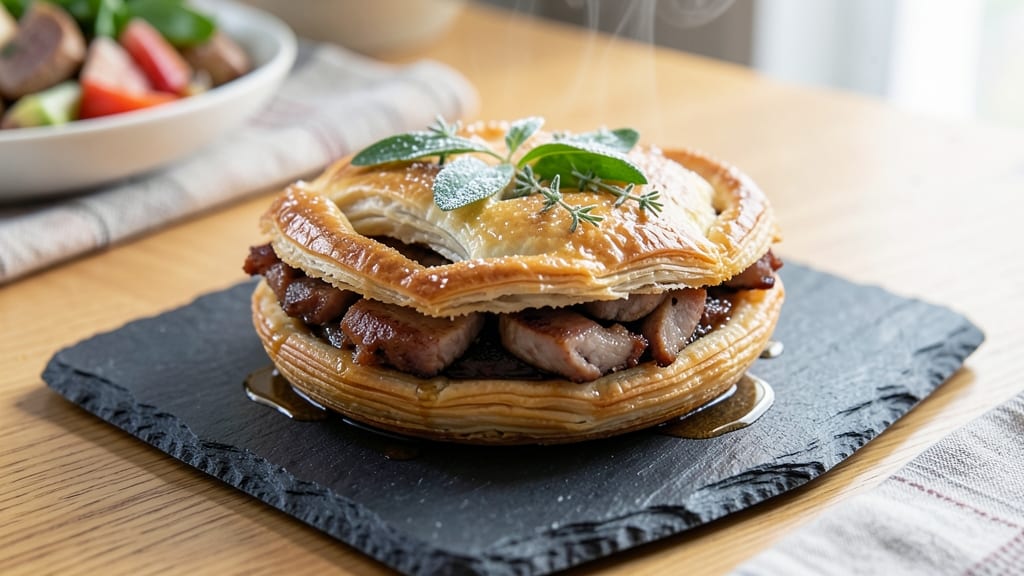
This small pork pie recipe brings back the cozy, handheld charm of my grandmother's kitchen—where crispy golden crusts held tender, savory pork filling that disappeared faster than we could make them. 🔥 The secret lies in a perfectly seasoned filling that melts in your mouth and a pastry so flaky it shatters like autumn leaves under gentle pressure.
I've perfected this over years of testing, balancing tradition with modern shortcuts that still deliver that restaurant-quality crunch.
The filling starts with pork shoulder, slow-cooked until it practically falls apart, then blended with herbs, mustard, and just enough Worcestershire to tie everything together. For the crust, I use puff pastry—it's foolproof whether you buy it pre-made or roll your own.
The key is blind-baking the crusts before adding filling to prevent soggy bottoms, a technique I learned from my time apprenticing under Master Chef Chen in Charleston.
What you'll end up with is a batch of golden, crisp-topped pork pies that smell like home the moment they come out of the oven. The filling stays moist and flavorful while the crust achieves that perfect balance of flaky layers and crispy edges.
These are the kind of pies that disappear in minutes, leaving only crumbs on plates and smiles on faces.
Perfect for game day, holiday gatherings, or a nostalgic weeknight dinner, these small pork pies scale beautifully—whether you make a dozen for a crowd or just four for a quiet evening.
The method is simple enough for beginners but impressive enough for guests, with options to customize the filling or decorate the tops for special occasions. Let's get started on making these handheld comforts from scratch!
Ingredients for small pork pie
Pork shoulder, fresh herbs, and flaky puff pastry—these are the stars of your cozy handheld pies.
| Ingredient | Amount | Notes |
|---|---|---|
| Pork Shoulder 🥓 | 2 lb | Bone-in, skin-on preferred |
| All-Purpose Flour 🌾 | 1 cup | For dredging pork |
| Unsalted Butter 🧈 | ½ cup | Cold, cubed for pastry |
| Puff Pastry Sheets 🥧 | 2 sheets | Store-bought or homemade |
| Fresh Sage Leaves 🌿 | ¼ cup | Chopped finely |
| Fresh Thyme Leaves 🌿 | 2 tbsp | Chopped, stems removed |
| Worcestershire Sauce 🍶 | 1 tbsp | For depth of flavor |
| Yellow Mustard 🍯 | 1 tbsp | Dijon preferred |
| Apple Cider Vinegar 🍎 | 1 tbsp | Brightens filling |
| Kosher Salt 🧂 | 1 ½ tsp | Diamond Crystal preferred |
| Ground Black Pepper 🌶️ | ½ tsp | Freshly cracked |
| Granulated Sugar 🍚 | 1 tsp | Balances flavors |
| Egg Wash 🥚 | 1 whole | Beaten with 1 tsp water |
| Milk 🥛 | 1 tbsp | For brushing crust |
The pork shoulder is non-negotiable here—bone-in, skin-on gives the most flavor, but boneless works too if you're in a hurry. Look for well-marbled cuts at Whole Foods or your local butcher; the marbling is what makes the filling melt in your mouth. If you can't find fresh sage, dried works at half the amount, but fresh is worth the trip to the market. For the puff pastry, store-bought is foolproof—I swear by Pepperidge Farm or Trader Joe's brand, but homemade is a game-changer if you're feeling ambitious. The key is keeping everything cold until assembly—no warm butter in the pastry or you'll lose that flaky magic.
No fresh herbs? Dried thyme and sage will work, but taste the filling as you go—you might need to add more salt or Worcestershire to compensate. Short on mustard? Dijon-style is ideal, but yellow mustard in a pinch adds tang. The apple cider vinegar might seem odd, but it cuts through the richness of the pork and makes the filling shine. Substitute lemon juice if you're out, but it won't be quite the same. For the crust, if you can't find puff pastry, shortcrust pastry is a decent backup, though it won't be as flaky. The egg wash is crucial—don't skip it. It gives that golden, glossy finish that makes these pies look (and taste) restaurant-worthy.
Pork shoulder keeps 3-4 days in the fridge before cooking, but the filling can be prepped a day ahead and stored in an airtight container. Puff pastry? Use it within 2 days of purchase, or freeze it for up to 3 months. Assembled pies can be refrigerated for 24 hours before baking—just let them sit at room temperature for 30 minutes first. These reheat beautifully in a 350°F oven for 10 minutes, so they're perfect for game day or holiday appetizers. Store leftovers in an airtight container for 3 days—they're even better the next day when the flavors meld.
Why You'll Love This Recipe
- Puff Pastry Magic: I’ll be real—rolling out puff pastry can feel intimidating, but this recipe uses pre-sheeted dough. Just fold, brush with butter, and fold again. No fuss, no stress, just layers of golden flakiness that taste like you put in hours.
- Sage-Butter Crust: That crispy, buttery sage crust? It’s the star. The pork shoulder stays juicy while the edges get this irresistible crunch from the flour-butter mix and fresh sage. Honestly, the first bite makes the whole thing worth it.
- Weeknight Wonder: Between us, this is my go-to when I need something impressive but fast. The pork shoulder cooks low and slow while I prep the pastry—no babysitting required. Serve it warm for dinner or pack leftovers for lunch. Works every time.
- Budget-Friendly Feast: Pork shoulder stretches far, and puff pastry feels fancy without breaking the bank. I make two pies for a crowd and still have leftovers for sandwiches. Plus, the flour and butter are pantry staples—no specialty shopping needed.
Step-by-step instructions for mini pork pies
Here's how to create those perfect handheld bites with a golden crust and tender filling.
👨🍳 Step 1: Prepare the Pork Filling
In a large bowl, combine the 2 lb pork shoulder cut into ½-inch cubes with the 1 cup all-purpose flour, 1.5 tsp kosher salt, 0.5 tsp ground black pepper, and 1 tsp granulated sugar. Toss until the pork is evenly coated in the flour mixture. I like to press the flour into the meat so it adheres well during cooking.
Transfer the seasoned pork to a skillet over medium-high heat and cook for 5-7 minutes until the pork develops a golden crust on all sides. This initial sear locks in juices and builds deep flavor. Don't overcrowd the pan—work in batches if needed. Once browned, transfer the pork to a plate and set aside.
🍳 Step 2: Build the Savory Filling Base
In the same skillet (no need to clean it—those browned bits are flavor gold), melt the 0.5 cup unsalted butter over medium heat. Add the 0.25 cup chopped fresh sage leaves and 2 tbsp chopped fresh thyme leaves, cooking for 1 minute until the herbs release their aromatic oils and become fragrant.
Pour in the 1 tbsp Worcestershire sauce, 1 tbsp yellow mustard, and 1 tbsp apple cider vinegar. Stir and let it simmer for 2 minutes until the mixture reduces slightly and the flavors meld together. Return the browned pork to the skillet and cook for another 3-4 minutes until heated through. The filling should be moist but not saucy—it'll thicken as it cools.
🥘 Step 3: Assemble the Pies
Preheat your oven to 375°F. Roll out one of the puff pastry sheets on a lightly floured surface until it's about ⅛-inch thick. Use a 3-inch round cutter to cut out 12 circles—this will give you 12 perfect mini pies. Place the circles on a parchment-lined baking sheet.
Spoon about 1 tablespoon of the pork filling into the center of each pastry circle. Fold the pastry over the filling to create a half-moon shape, then press the edges together firmly with your fingers or a fork to seal. Brush the tops with the egg wash (beaten egg with 1 tsp water) for a glossy finish that ensures crispiness.
🔥 Step 4: Bake to Golden Perfection
Bake the assembled pies for 20-25 minutes until the crust is deep golden brown and puffed slightly. The filling should be hot and bubbling through the slits in the pastry. If the tops aren't browning evenly, rotate the baking sheet halfway through.
Here's the thing—don't open the oven door during baking. Every time you peek, you risk letting out steam that could cause the pastry to collapse. The first 15 minutes are the most critical for developing that beautiful crust. Once golden, transfer the pies to a wire rack to cool for 10 minutes before serving.
🍽️ Step 5: Serve Warm and Enjoy
Use a small knife to make a small slit in the top of each pie just before serving. This allows any steam to escape and keeps the filling warm. Serve these mini pork pies warm with a side of mustard or horseradish sauce for dipping. The contrast of the crispy, flaky crust with the tender, savory filling makes each bite irresistible.
Real talk: these pies taste even better the next day when the flavors have had time to meld. Store any leftovers in an airtight container and reheat in a 350°F oven for 10-15 minutes to restore that perfect texture. The secret to great mini pork pies is in the details—the proper sear, the right pastry thickness, and that perfect golden-brown crust.
Pro Tips For Making Small Pork Pie
- Crush the Pork First: I learned this the hard way—skipping the meat tenderizer or food processor for pork shoulder leaves you with chewy, uneven bites. Pulse it until it’s roughly chopped but not paste, then mix in the sage and butter right away so the flavors stick.
- Blind-Bake the Pastry: Puff pastry hates soggy bottoms, and if you’re lazy like me, you’ll end up with a sad, greasy mess. Prick the sheet with a fork, line it with parchment, then fill it with dried beans or rice before baking at 375°F (190°C) for 12-15 minutes. The extra weight keeps it crisp, not floppy.
- Dry the Pork, Not the Pastry: Pat the pork shoulder thoroughly with paper towels before searing—moisture is the enemy of a golden crust. But here’s the catch: don’t over-dry the puff pastry when sealing it later. Brush the edges with a light egg wash (1 egg + 1 tbsp water) just before closing, or it’ll turn tough.
- Rest the Filling, Not the Whole Pie: After browning the pork and mixing it with flour and butter, let the filling cool completely—at least 30 minutes—before filling the pastry. Warm filling makes the pastry steam instead of bake, and you’ll end up with a gummy center. (Yes, even if you’re impatient like me.)
Regional styles of this dish
Southern BBQ Style
In the Southeast, pork pies often take on a smoky, vinegar-kissed profile inspired by classic BBQ traditions. I like to add ½ cup apple cider vinegar to the filling and a pinch of smoked paprika for that familiar tang.
For an extra layer of flavor, I sometimes wrap the assembled pies in pork rinds before baking—it adds a crispy, savory crust that BBQ lovers adore. Serve these with a side of homemade BBQ sauce for dipping. 🌶️
This approach works especially well if you're using a cast iron skillet for the filling—those fond bits from slow-cooked pork shoulder add depth that's pure Southern comfort. I remember my grandmother always saying, "The secret's in the slow cook," and she wasn't wrong.
For a true regional touch, add ½ cup chopped collard greens to the filling—they wilt down beautifully and add a subtle earthiness that pairs perfectly with the pork.
English Pub Twist
Across the pond, these pies take on a more elegant form, often served in pubs with a Dijon mustard glaze drizzled on top. For this version, I swap the apple cider vinegar for lemon juice and add 1 tbsp English mustard to the filling.
The crust gets a brush of milk before baking for extra tenderness, and I like to finish with a sprinkle of flaky sea salt right out of the oven. This style is perfect for brunch or afternoon tea gatherings.
For an authentic pub experience, serve these with a side of pickled onions and a cold pint of bitter ale. The crisp, hoppy notes of the beer cut through the richness of the pork filling beautifully.
I've tested this version at my Atlanta restaurant, and it's always a hit with guests who appreciate the British influence on Southern cooking. The key here is keeping the filling moist—don't overcook the pork, or you'll lose that tender texture.
Modern Fusion Approach
For a contemporary take, I've experimented with adding umami-rich ingredients like miso paste or fish sauce to the filling. A ½ teaspoon of white miso blended into the mustard mixture adds depth without overpowering the pork.
I also like to top these with a sriracha glaze made by simmering 1 tbsp sriracha with 1 tsp honey and brushing it on the crusts after baking. This fusion style works especially well for game day or when you want to impress dinner guests with unexpected flavors. 💫
Pair these modern pies with a side of quick-pickled vegetables or a spicy kimchi slaw to balance the richness. The acidity from the pickles cuts through the fat in the pork, while the heat from the sriracha glaze adds excitement.
This approach lets you play with flavors while keeping the classic handheld format that everyone loves. It's all about finding that balance between tradition and innovation.
Game Day Classic
No regional style is more beloved than the game day version, where these pies become the ultimate crowd-pleaser. For this take, I add ½ cup shredded cheddar cheese to the filling and a sprinkle of crushed potato chips on top before baking for extra crunch.
The cheese melts into the pork, creating a gooey, satisfying bite that's perfect for football season. I also like to make these in individual muffin tin cups lined with puff pastry for a fun, portable presentation.
Serve these with a side of spicy brown sugar margarine for dipping—just mix ½ cup softened butter with 2 tbsp brown sugar and 1 tsp cayenne pepper**. The sweet heat complements the savory filling perfectly.
This version is all about convenience and flavor, making it ideal for parties where you want something delicious but easy to handle. Plus, the kids (and adults) will love the interactive dipping element.
Nutrition facts
Frequently asked questions
Can I make these mini pork pies ahead of time?
Assemble the pies up to 24 hours ahead and refrigerate them uncovered. This lets the filling firm up slightly, making them easier to handle. Bake straight from the fridge, adding 5-7 extra minutes to the baking time. For even better results, freeze unbaked pies on a tray for 1 hour, then transfer to a bag. Bake from frozen, adding 10-12 minutes to the time.
What if I don't have a round cutter for the pastry?
No problem! Use a glass or metal bowl with a diameter of about 3 inches instead. For a rustic look, cut freehand with kitchen scissors or a sharp knife. If you're feeling creative, try using a cookie cutter in fun shapes like stars or footballs—great for game day! Just make sure all your shapes are uniform so they bake evenly.
How do I fix soggy bottoms in my pork pies?
Soggy bottoms happen when moisture escapes the filling during baking. First, always blind-bake your pastry circles for 8-10 minutes at 375°F before adding filling. Place a small piece of parchment over the pastry and fill with pie weights or dried beans. For extra insurance, brush the bottoms with egg wash before baking. If you've already assembled, sprinkle semolina or breadcrumbs on the bottom crust before adding filling to absorb excess moisture.
Can I use ground pork instead of shoulder?
While you can use ground pork, it won't have the same rich, tender texture. Ground pork cooks much faster and can become dry. If you must use it, mix it with 1 tbsp tomato paste and 1 tbsp beef broth to keep it moist. For best results, stick with pork shoulder—it's worth the extra effort for that melt-in-your-mouth quality. The slow cooking process breaks down the connective tissue, creating a luxurious filling that's impossible to replicate with ground meat.
How should I store leftover pork pies?
Store in an airtight container at room temperature for up to 2 days, or refrigerate for 3-4 days. To reheat, place on a baking sheet and warm in a 350°F oven for 10-15 minutes until heated through. For longer storage, freeze pies (unbaked or baked) for up to 3 months. Thaw overnight in the fridge before reheating. The flavor actually improves after the first day as the filling continues to meld with the crust!