Desserts
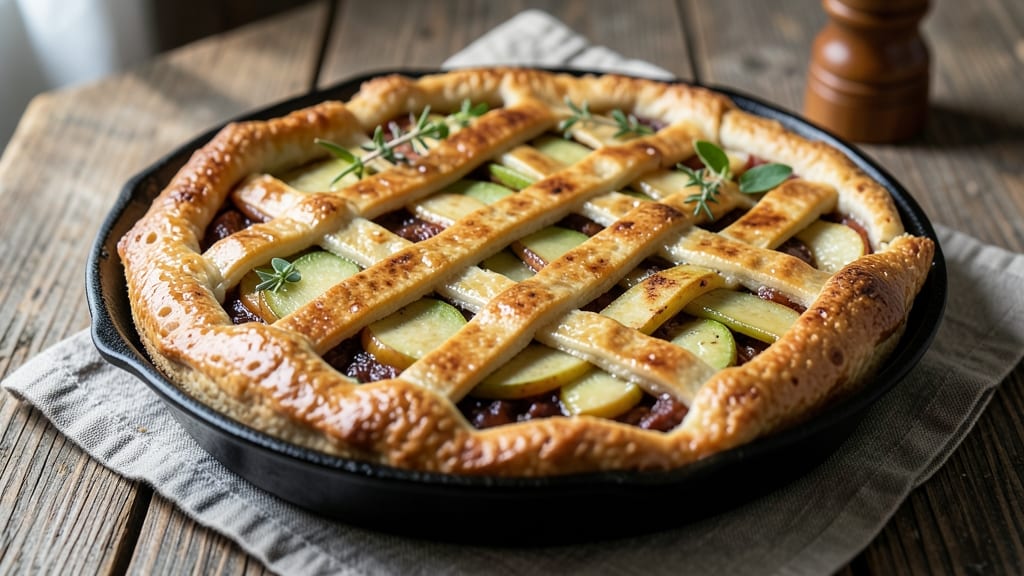
This sourdough discard apple pie transforms kitchen scraps into a flaky, tangy-sweet dessert that tastes like a bakery secret. 🌟 The fermented discard creates a crust with deep flavor and perfect texture, while the classic apple filling delivers that comforting crunch.
I developed this recipe after discovering how sourdough discard elevates pies—no waste, just better flavor.
The magic happens in the dough, where sourdough discard adds natural tang and chewiness without extra effort. You’ll mix it with butter, flour, and a touch of sugar, then roll out a crust that’s golden and crisp by the time it bakes.
The filling combines tender apples, cinnamon, and butter for a balance of sweet and spice that keeps everyone asking for seconds.
What makes this pie special is how the sourdough discard boosts flavor while keeping the process simple. No need for store-bought crusts or complicated techniques—just a few ingredients and 30 minutes of active time.
The result? A pie with a flaky, buttery crust and a filling that’s just tender enough to melt in your mouth.
Serve it warm with vanilla ice cream or whipped cream for the full experience. This recipe is perfect for holiday gatherings, potlucks, or a cozy weekend treat—and it’s a great way to reduce food waste while making something extraordinary. Let’s get baking!
Ingredients for sourdough discard apple pie
Fermented flavor meets classic apple pie in this zero-waste dessert masterpiece.
| Ingredient | Amount | Notes |
|---|---|---|
| Sourdough Discard 🍞 | 1 ½ cups | Active, bubbly discard (not stale) |
| Unsalted Butter 🧈 | ¾ cup | Cold, cubed for texture |
| All-Purpose Flour 🌾 | 3 cups | Plus 2 tbsp for rolling |
| Granulated Sugar 🍚 | ¼ cup | Plus 2 tbsp for filling |
| Large Egg 🥚 | 1 whole | Room temperature preferred |
| Granny Smith Apples 🍎 | 6 medium | Peeled, cored, sliced thin |
| Light Brown Sugar 🍚 | ½ cup | Packed firmly |
| Ground Cinnamon 🌿 | 2 tsp | Freshly ground preferred |
| Lemon Juice 🍋 | 1 tbsp | Freshly squeezed |
| Salt 🧂 | ½ tsp | Diamond Crystal preferred |
| Ground Black Pepper 🌶️ | ¼ tsp | Freshly cracked |
| Vanilla Ice Cream 🍦 | 1 ½ cups | For serving (optional) |
The sourdough discard is non-negotiable here—look for bubbly, active discard from your starter, not stale scraps. King Arthur or Bob's Red Mill flour yields the best texture, but any all-purpose works. For the butter, Plugrá or Land O'Lakes unsalted gives reliable flavor without excess salt. Apples should be firm but not rock-hard—Granny Smiths hold their shape best, but Honeycrisp adds sweetness. Store your discard in an airtight container in the fridge until ready to use, and always use it within 3 days of discarding.
No sourdough starter? Substitute 1 cup plain yogurt or buttermilk for tang, though texture won't be identical. Swap Granny Smiths for McIntosh or Braeburn if you prefer softer apples. The cinnamon can be Ceylon cinnamon at half the amount for subtler flavor. For a gluten-free crust, replace flour with 1.5 cups gluten-free 1:1 blend plus 0.5 tsp xanthan gum. Brown sugar substitutes? Coconut sugar works 1:1, but texture may vary slightly. Prefer less sugar? Reduce to 0.35 cup light brown sugar and add 0.25 tsp extra cinnamon for depth.
This pie reheats beautifully—wrap cooled slices in foil and warm at 350°F for 10 minutes. The crust stays fresh for 3 days at room temperature if stored in an airtight container, though filling softens. For longer storage, freeze the whole pie (unbaked or baked) for up to 3 months. Thaw overnight in the fridge before serving. The filling can be prepped 1 day ahead and stored in the fridge—just bake straight from cold. Ice cream pairs best when served within 2 hours of baking for optimal texture contrast.
Why You'll Love This Recipe
- Zero-Waste Magic: I swear by this trick—turning yesterday’s discard into today’s pie crust. No extra trips to the store, no guilt over scraps. That tangy sourdough flavor? It’s the secret weapon that makes this crust taste alive compared to store-bought.
- Buttery Apple Bliss: The moment that sugar caramelizes with butter? Pure happiness. The crust stays crisp at the edges while the filling melts into that perfect, custardy puddle. Honestly, I’ve made apple pie a dozen ways, and this one still wins.
- Weeknight Crowd-Pleaser: Slice it for dinner, pack it for lunch—this pie holds up beautifully for days. The sourdough crust even reheats like a dream (microwave or oven, no judgment). My kids beg for it at school, and my husband sneaks seconds when he thinks I’m not looking.
- Budget-Friendly Luxury: Flour, sugar, butter, and an egg—that’s it. No fancy apples needed (I use whatever’s on sale), and the sourdough discard? Free if you bake bread. It’s the kind of dessert that feels special but costs next to nothing.
Step-by-step instructions for sourdough discard apple pie
Here's the method that transforms active sourdough discard into a tangy, flavorful crust while keeping the filling perfectly spiced.
👨🍳 Step 1: Prepare the Fermented Crust
In a large mixing bowl, combine the 1.5 cups sourdough discard with 0.75 cup cold cubed unsalted butter and 0.25 cup granulated sugar. Use a pastry cutter or your fingers to work the butter into the discard until the mixture resembles coarse crumbs with pea-sized butter pieces remaining. This texture is crucial—it creates flaky layers when baked.
Add the 3 cups all-purpose flour and 0.5 tsp salt, then mix gently with a fork or dough scraper until just combined. The dough will be shaggy and sticky, which is normal. Avoid overmixing—you want to preserve the sourdough's natural gluten development. Press the dough into a disc, wrap in plastic, and refrigerate for at least 1 hour (or up to 24 hours) to firm up.
🍳 Step 2: Assemble the Apple Filling
Peel, core, and thinly slice the 6 medium Granny Smith apples into ¼-inch thick slices. Toss them immediately with 0.5 cup light brown sugar, 2 tsp ground cinnamon, 1 tbsp lemon juice, and 0.25 tsp ground black pepper in a large bowl. The lemon juice prevents browning while adding brightness that cuts through the apples' tartness.
Let the apple mixture sit for 10 minutes while you roll out the dough. This resting period allows the flavors to meld and the apples to release some juices, which will create a more cohesive filling. For extra texture, sprinkle 2 tbsp granulated sugar over the apples before assembling.
🥘 Step 3: Roll and Layer the Pie
On a lightly floured surface, roll out the chilled dough into a 12-inch circle, about ⅛-inch thick. Transfer it to a 9-inch pie dish, pressing gently to fit while leaving a ½-inch overhang on all sides. Trim the excess dough, then crimp the edges using your fingers or a fork to create a decorative border.
Pour the prepared apple filling into the crust, mounding it slightly in the center. The filling should come up to within ½ inch of the crust's edge. Brush the overhanging dough with the 1 whole large egg, beaten lightly with 1 tablespoon water, for a golden finish. This egg wash also helps seal the edges for a clean crust.
🔥 Step 4: Bake to Golden Perfection
Preheat your oven to 375°F and place a baking sheet on the lower rack to catch any drips. Bake the pie for 45-50 minutes until the crust is deep golden brown and the filling bubbles vigorously at the edges. The center should still have a slight jiggle—it will firm up as it cools.
For the final 10 minutes, increase the oven temperature to 400°F to achieve a deeper caramelization on the crust. Watch closely—sourdough crusts can brown quickly. When done, transfer the pie to a wire rack and let it cool for at least 2 hours before slicing. This resting period allows the filling to set and prevents a runny pie.
🍽️ Step 5: Serve with Optional Ice Cream
Slice the pie into 8 equal wedges using a sharp knife dipped in hot water and wiped clean between cuts. The crust should be crisp yet tender, with a subtle tang from the sourdough. Serve warm with 1.5 cups vanilla ice cream on the side for the perfect balance of textures and temperatures.
This pie's secret lies in the sourdough discard—its natural acids tenderize the apples while adding complexity to the crust. The result is a pie that's both rustic and refined, with a texture that's crisp in the crust and perfectly spiced in the filling.
Pro Tips For Making Sourdough Discard Apple Pie
- STIR THE DISCARD WELL: Mix your sourdough discard with the flour and sugar until it looks like wet sand—not just a few lumps. I learned this the hard way: uneven hydration means a dense filling that won’t set properly, and no one wants a pie that tastes like glue.
- CHILL THE FILLING: Let the apple-sourdough mixture sit in the fridge for at least 30 minutes before baking. This isn’t just about convenience—it gives the discard time to thicken slightly, so your pie doesn’t leak everywhere when it hits the oven. (Yes, even if you’re impatient like me.)
- BRUSH THE CRUST TWICE: Don’t skimp on the butter wash—apply it before baking and again after the first 15 minutes. The first coat helps with browning, but the second seals in moisture and keeps the crust from drying out. I used to forget this, and my crusts always ended up crispy on top but dry underneath.
- USE COLD BUTTER FOR DOUGH: Cut the butter into tiny pea-sized pieces and mix it into the flour with your fingers until it resembles coarse crumbs. This ensures even distribution and prevents the dough from turning greasy. I was skeptical until I tried it—now my crusts are flaky without being tough.
Essential equipment for sourdough discard apple pie
Pie Dish Essentials
Start with a 9-inch pie dish—preferably a ceramic or glass dish like Pyrex or Corelle for even heat distribution. Avoid dark metal dishes, which can over-brown the crust. I use a 9-inch glass pie plate from Wilton because it handles temperature shifts beautifully and prevents soggy bottoms.
For a rustic touch, consider a cast-iron skillet (like Lodge) for a crispier crust, but it requires extra monitoring. 🍰
Rolling Tools
A pie crust roller (like the OXO Good Grips) makes rolling dough effortless, but a wooden rolling pin (like Ozeri Touch) works just as well. For a rustic texture, skip rolling entirely and press the dough directly into the dish with your fingers or a dough scraper.
I keep a 12-inch rolling surface (like a marble slab or silicone mat) nearby to prevent sticking. A light dusting of flour (about 2 tablespoons) keeps the dough from clinging.
Mixing & Prep
Use a large mixing bowl (like Pyrex glass) for the crust and a stainless steel bowl for the filling to prevent browning. A pastry cutter (like Kitchy) or your fingers works best for cutting butter into the sourdough discard—avoid food processors, which overwork the dough.
For precise measurements, I recommend scale-based measuring cups (like OXO stainless steel) for flour and sugar to ensure accuracy in the crust’s texture. 🥄
Baking Gear
A baking sheet on the lower rack catches drips, and a wire cooling rack prevents soggy bottoms. For even baking, use an oven thermometer (like Thermoworks) to confirm your oven’s accuracy—home ovens often run 25°F hotter or colder than set.
I also keep a pie weights set (like Wilton) on hand for blind baking, though this pie doesn’t require it. A sharp chef’s knife (like Mercer Culinary) for slicing and a pastry brush (for egg wash) completes the toolkit.
Nutrition facts
Frequently asked questions
Can I use stale sourdough discard for this pie?
Never! The discard must be active and bubbly—stale discard won't provide the tangy flavor or proper fermentation for the crust. If your discard is past its prime, feed your starter with equal parts flour and water (1:1 ratio) 12-24 hours before using it. Fresh discard is key to that signature sourdough taste and texture.
How do I prevent a soggy bottom crust?
Prevent sogginess by baking the crust 5-10 minutes alone (before adding filling) at 375°F until lightly golden. For extra insurance, sprinkle 2 tablespoons cornstarch over the bottom crust before adding apples. The sourdough discard's moisture content makes this a common issue—don't skip the blind-baking step!
Can I make this pie ahead of time?
Assemble the pie (unbaked) and refrigerate for up to 24 hours before baking. For a baked pie, store it at room temperature for 3 days or freeze for 3 months. Thaw overnight in the fridge—microwaving ruins the texture. The filling actually improves after resting, developing deeper flavor.
What's the best apple variety for this recipe?
Granny Smith is ideal for its tartness and firm texture, but Honeycrisp or Braeburn work beautifully too. Avoid overly soft apples like McIntosh—they'll make the filling mushy. For extra juiciness, toss sliced apples with 1 teaspoon cornstarch before baking to thicken the juices.
Why does my crust look pale after baking?
Pale crusts usually mean underbaked dough or insufficient butter distribution. Try these fixes:
- Increase oven temp to 400°F for final 10 minutes
- Ensure butter is cold and cubed (not melted) when mixing
- Brush crust with egg wash** before baking. The sourdough discard's natural acids can also slow browning—don't overcorrect by overbaking.