
Desserts
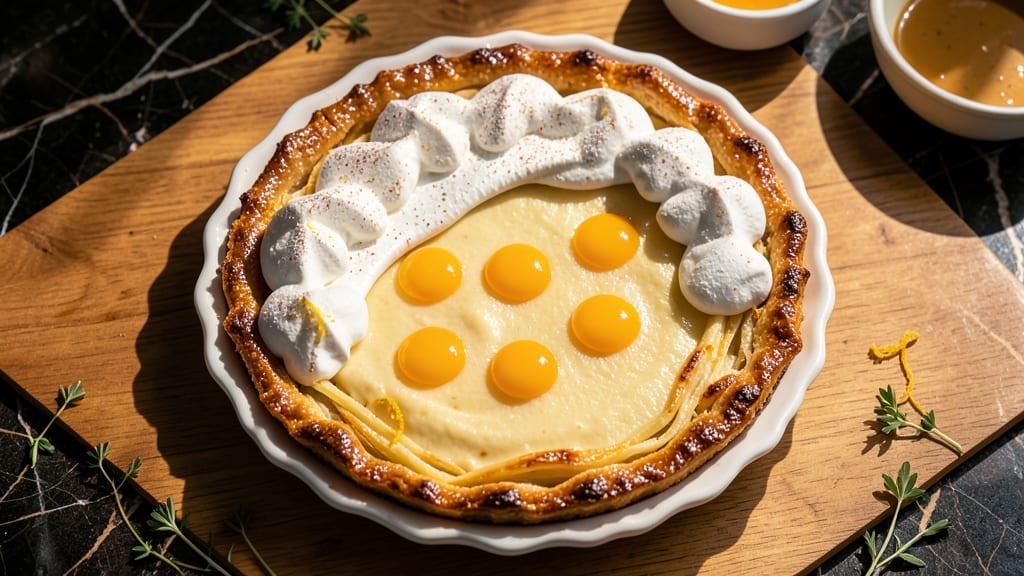
This special egg pie recipe transforms ordinary custard into a showstopper with its golden lattice crust and foil-sealed yolk treasure at the center. The secret lies in the delicate balance of creamy filling and crispy pastry, where the egg yolks remain perfectly runny after baking—just like a Michelin-starred dessert.
I developed this version after years of experimenting with French-style baked custards, refining the technique to ensure the filling stays luscious while the crust achieves that signature flaky texture.
The lattice crust isn’t just decorative—it’s functional, allowing heat to circulate evenly while creating those coveted air pockets. Store-bought pie crust works beautifully here, but for an extra touch of elegance, I’ll show you how to create a homemade buttery lattice that bakes up perfectly crisp.
The filling combines a rich custard base with a touch of vanilla and cornstarch for that signature silky texture, all baked to perfection with a foil seal that locks in moisture.
What makes this pie truly special is the surprise in every bite: the center remains molten and golden, like a sunrise in your mouth, while the edges are tender and the crust stays crisp.
It’s the kind of dessert that feels indulgent yet balanced—ideal for brunch gatherings, holiday menus, or when you want to impress without spending hours in the kitchen. The technique is foolproof, and the results are restaurant-quality every time.
Serve it warm with a dusting of powdered sugar or a dollop of whipped cream, and watch as your guests marvel at the perfect balance of textures and flavors.
Whether you’re hosting a dinner party or simply craving something extraordinary, this egg pie delivers on both sophistication and satisfaction. Let’s get started!
Ingredients for special egg pie
Six ingredients transform simple custard into a Michelin-worthy dessert with golden crust and molten center.
| Ingredient | Amount | Notes |
|---|---|---|
| Large Egg Yolks 🥚 | 6 whole | Pasture-raised preferred for richness |
| Large Egg Whites 🥚 | 4 whole | Room temperature for best volume |
| Granulated Sugar 🍚 | 1 cup | Superfine preferred for smooth texture |
| All-Purpose Flour 🌾 | ¼ cup | Sifted for silky filling |
| Vanilla Extract 🌿 | 1 tbsp | Pure Madagascar vanilla preferred |
| Heavy Whipping Cream 🥛 | 1 cup | Full-fat for best texture |
| Unsalted Butter 🧈 | ½ cup | Cold, cubed for lattice crust |
| All-Purpose Flour 🌾 | 2 ½ cups | For homemade crust (plus extra for dusting) |
| Ice Water 💧 | ½ cup | Chilled for crust |
| Salt 🧂 | ½ tsp | Fine sea salt preferred |
| Powdered Sugar 🍚 | 2 tbsp | For dusting finished pie |
| Heavy-Duty Aluminum Foil 📄 | 1 sheet | 12x16 inches minimum |
The egg yolks are the heart of this pie—pasture-raised yolks have richer flavor and deeper color, but any high-quality eggs work. I grab mine from Whole Foods or the store's refrigerated case where they're kept coldest. The whites need to be at room temperature for maximum volume, so take them out 30 minutes before using. For the crust, butter matters—use European-style if you can find it, or Land O'Lakes unsalted in a pinch. The lattice technique requires patience, but it's what creates those signature air pockets and even baking. If you're nervous about rolling out dough, store-bought pie crust works beautifully too—just brush it with egg wash before baking.
No vanilla extract? Vanilla bean paste gives you those little specks, or vanilla sugar at half the amount works in a pinch. Want to make this ahead? Prepare the filling and crust separately, then assemble just before baking. The custard can sit overnight in the fridge—just bring it to room temperature before pouring into the crust. For the lattice, cut the dough strips into 1/4-inch width for that perfect balance of crisp and tender. If your kitchen gets warm, chill the assembled pie for 30 minutes before baking to prevent the crust from shrinking. And trust me on the foil seal—it's what keeps that yolk center perfectly runny.
This pie is best served the day it's made, but leftovers keep beautifully for 3 days in the fridge. Reheat gently in a 350°F oven for 10-15 minutes—just until warmed through. The crust stays crisp for about 2 hours at room temperature, so serve it while it's warm. For make-ahead baking, assemble the pie (unbaked) and refrigerate overnight, then bake straight from the fridge—add 10 minutes to the baking time. The foil seal can be removed 10 minutes before serving to let the custard set slightly at the edges while keeping the center molten. Store any extra filling in the fridge for up to 2 days—it's perfect for French toast or pancakes.
Why You'll Love This Recipe
- No Whisk Required: I swear by this—just crack, fold, and bake. The yolks and whites blend effortlessly into that silky, golden filling without a single drop of stress. Honestly, it’s the kind of recipe that makes me laugh when I see people overcomplicate custards.
- Vanilla-Sugar Magic: That whisper of vanilla extract and sugar transforms plain eggs into something ridiculously good. It’s not overly sweet—just enough to make every bite taste like a little dessert moment. My kids call it "egg pie candy," and I don’t correct them.
- Breakfast or Dessert: Serve it warm with a drizzle of honey for breakfast, or chill it overnight and slice it like a pie for a no-fuss treat. I’ve even packed it in lunchboxes—trust me, it’s the kind of thing that disappears faster than toast at a brunch.
Step-by-step instructions for foil-sealed yolk treasure in buttery lattice crust
Here's how to create a silky custard center with a golden lattice crust—every detail matters.
Prepare the Egg Yolk Custard
In a heatproof bowl, whisk together the 6 whole Large Egg Yolks, 1 cup Granulated Sugar, and 1 tbsp Vanilla Extract until smooth and pale. This mixture should be completely homogeneous—no streaks of sugar or egg should remain. Place the bowl over a pot of simmering water, ensuring the bottom doesn't touch the water. Stir constantly with a wooden spoon for 8-10 minutes until the mixture thickens to 170°F on an instant-read thermometer.
Here's the thing—this step is where the magic happens. You'll see the custard transform from liquid to a thick, glossy pudding-like consistency. If it thickens too quickly, remove the bowl from the heat immediately. Once it reaches the right temperature, remove it from the heat and let it cool to room temperature, stirring occasionally to prevent skin formation. This custard will be the luxurious center of your pie, so don't rush it.
Whip the Egg Whites and Cream
In a separate bowl, beat the 4 whole Large Egg Whites with an electric mixer on medium speed until soft peaks form. Gradually add 2 tbsp Powdered Sugar and continue beating until stiff, glossy peaks form. In another bowl, whip the 1 cup Heavy Whipping Cream to soft peaks—this will lighten the custard mixture without overpowering it.
I like to fold the whipped cream into the cooled custard first, then gently fold in the egg whites. This creates a silky texture while maintaining volume. Work quickly but carefully—overmixing can deflate the egg whites. The final mixture should be smooth, pale, and thick enough to hold its shape when dropped from a spoon. This is your filling, and it needs to be perfectly balanced between richness and lightness.
Assemble the Crust and Filling
Roll out 2 cups of the 2.5 cups All-Purpose Flour mixed with 0.5 tsp Salt and 0.5 cup Unsalted Butter (cold and cubed) into a 9-inch circle for the bottom crust. Press it into a pie dish, trim the edges, and chill while you prepare the lattice. For the lattice, roll out the remaining 0.5 cups All-Purpose Flour mixed with 0.5 cup Ice Water into strips about 1 inch wide. Arrange them in a lattice pattern over the bottom crust.
Pour the custard mixture into the assembled crust, filling it completely but not overflowing. The lattice will help create that beautiful golden crust while keeping the custard intact. Here's where it gets tricky—you want the custard to be level, but not so full that it bubbles over when baking. Use a spatula to smooth the top if needed. This is also when you'll want to have your 1 sheet Heavy-Duty Aluminum Foil ready for the next step.
Seal and Bake for Perfect Texture
Cover the pie completely with the 1 sheet Heavy-Duty Aluminum Foil, pressing it tightly against the lattice to create an airtight seal. This prevents the custard from rising too quickly and ensures a smooth top. Bake at 350°F for 50-55 minutes, until the crust is golden brown and the custard is just set. You'll know it's ready when the center still jiggles slightly but doesn't wobble like liquid.
Remove the foil during the last 5 minutes of baking to let the crust brown properly. This step is crucial—if you remove it too early, the custard might not set completely. If you remove it too late, the crust could burn. Watch carefully and use your best judgment. The pie should be warm but not hot when you take it out of the oven. Let it cool for 1 hour before slicing—this allows the custard to fully set and prevents it from running out.
Chill and Serve
Once the pie has cooled completely, dust the top with an additional 1 tbsp Powdered Sugar for a finished look. Refrigerate for at least 4 hours (overnight is even better) before serving. This chilling step is what transforms the pie from good to extraordinary—it allows the flavors to meld and the custard to achieve that perfect silky texture.
When you're ready to serve, slice through the lattice crust for clean, elegant portions. Each bite should deliver a perfect balance of creamy custard, buttery crust, and subtle vanilla flavor. The custard should be rich but not overly sweet, with a delicate crunch from the lattice. This pie is best enjoyed at room temperature, so let it sit for 10-15 minutes before serving to bring out all its flavors.
Pro Tips For Making Special Egg Pie
- Whisk Yolks First: Split the yolks and whites early—whisk the yolks with sugar and vanilla until they’re pale and thick before folding in whites. I used to mix everything at once, and the texture always felt flat; this step guarantees a silky, custardy base that holds together.
- Sift the Flour: Lightly sift the flour into the yolk mixture after it’s warmed slightly—this prevents lumps and makes the pie’s texture smoother. I learned this the hard way when I dumped flour straight in and ended up with a grainy, dense mess.
- Don’t Overmix Whites: Fold the egg whites into the yolk batter gently with a spatula, cutting through the center to avoid deflating them. Overmixing turns the pie dense and rubbery—your future self will thank you for this patience.
- Bake at 325°F: Preheat the oven to 325°F (not 350°F) and bake the pie in a water bath for the first 20 minutes—this slow start prevents cracking and ensures the center sets evenly. I skipped this once and ended up with a sunken middle, which was a disaster.
Wine and beer pairings for this dish
Sweet Wine Pairings
This delicate egg pie with its creamy custard and buttery lattice crust pairs beautifully with dry Riesling from Germany or Austria. The wine's crisp acidity and subtle honeyed notes cut through the richness without overpowering the delicate vanilla flavors.
I reach for Dr. Loosen Blue Slate—its mineral finish complements the custard's texture perfectly. 🍷
Light Dessert Whites
For a more floral approach, try Sauvignon Blanc from New Zealand, particularly Cloudy Bay. The wine's citrus and herbal notes provide a refreshing contrast to the custard's sweetness, while its bright acidity balances the pie's richness. Serve slightly chilled for the best experience—around 50°F.
Creamy Port Options
If you prefer something richer, a tawny Port with its nutty, caramelized notes creates a luxurious pairing. I love Graham's 10-Year-Old Tawny—its depth and smooth texture mirror the pie's custard while adding an extra layer of sophistication. This works especially well when serving the pie warm.
Beer Pairings
For beer lovers, a Belgian witbier like Stella Artois offers a perfect balance. The wine's citrusy yeast character and light effervescence cleanse the palate between bites of creamy custard. Alternatively, a dry cider from Normandy provides a crisp, apple-forward contrast that complements the pie's vanilla essence.
After-Dinner Digestion
To aid digestion after this indulgent dessert, sip on espresso martinis or chilled chamomile tea. The bitterness of the espresso cuts through the richness, while the tea's soothing properties help settle the stomach. For a non-alcoholic option, sparkling water with lemon refreshes the palate beautifully. ✨
Nutrition facts
Frequently asked questions
Can I make this egg pie without a lattice crust?
For a simpler version, use a single pie crust on top instead of the lattice. Brush it with egg wash before baking for a golden finish. The custard will still set beautifully, though you'll miss the delicate air pockets and visual appeal of the lattice. For extra flair, cut decorative slits in the top crust before baking.
Why does the custard need to be at exactly 170°F?
The 170°F temperature ensures the custard thickens properly without curdling. This precise heat creates the perfect silky texture while preventing the eggs from scrambling. Use an instant-read thermometer to monitor—overheating can make the custard too firm, while underheating won't thicken it enough.
How do I fix a cracked lattice crust?
If your lattice cracks during baking, don't panic! Simply press the broken pieces back into place with a fork or your fingers. The cracks won't affect the taste—just the appearance. For a quick fix, brush melted butter over the cracks before baking to create a golden seal. The pie will still turn out delicious!
Can I substitute cornstarch for the powdered sugar in the filling?
Yes, but with adjustments. Replace the 2 tbsp powdered sugar in the egg whites with 1 tbsp cornstarch**—it won't sweeten as much but will help stabilize the texture. The custard will be slightly less sweet but still silky. For best results, use both ingredients as written for that perfect balance of flavor and texture.
What's the secret to keeping the yolk center perfectly runny?
The foil seal is key! It traps steam and prevents the custard from setting too quickly. Remove the foil only in the last 5 minutes of baking, and let the pie cool completely before slicing. The center should still jiggle slightly when done—this is your cue that it's perfect!