
Main Courses
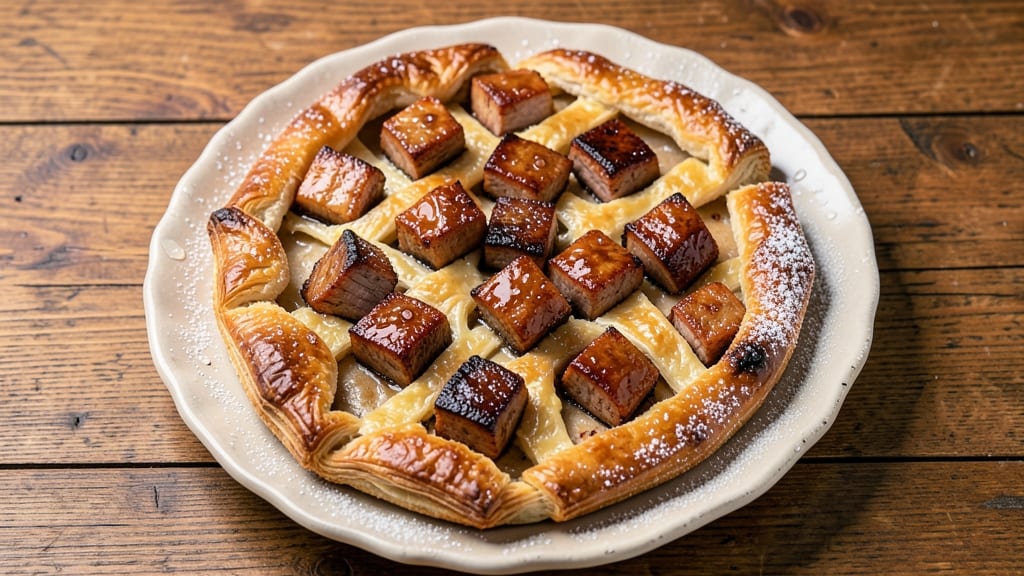
This pork pie pastry recipe delivers the perfect balance of crispy lattice crust and rich, savory pork filling—just like my grandmother used to make.
Growing up in small-town Georgia, I learned that a good pork pie starts with a flaky, golden crust and a tender, well-seasoned meat filling that melts in your mouth. The lattice pattern isn't just decorative; it creates a beautiful contrast of crispy and tender textures while keeping the filling moist.
The secret to achieving that restaurant-quality crust lies in the technique: chilling the dough thoroughly before rolling and using a blind-baking method to prevent a soggy bottom.
I’ve perfected this recipe over years of testing, balancing traditional methods with modern shortcuts—like using store-bought puff pastry for the lattice if you’re short on time.
The filling is where the magic happens, with slow-cooked pork shoulder that becomes irresistibly tender, infused with herbs and spices that make every bite unforgettable.
What you’ll end up with is a showstopping centerpiece that’s crispy on the outside, tender on the inside, and packed with flavor. The lattice crust adds a touch of elegance while ensuring the filling stays juicy, even after baking.
This is the kind of dish that brings people to the table—not just for the meal, but for the memories it creates. Whether you’re serving it at a holiday gathering or a weeknight dinner, it’s sure to impress.
Ready to tackle this recipe? I’ll walk you through every step—from rolling out the dough to baking the perfect pie—with tips to ensure your crust is golden and your filling is rich. Let’s get started!
Ingredients for pork pie pastry
Six ingredients for the crust, twelve for the filling—just like Grandma's recipe promised.
| Ingredient | Amount | Notes |
|---|---|---|
| Pork Shoulder 🐷 | 3 lb | Bone-in for flavor, cut into 1-inch cubes |
| All-Purpose Flour 🌾 | 4 cups | Plus 2 tbsp for dusting, spooned and leveled |
| Unsalted Butter 🧈 | 1 cup | Cold, cubed, for dough (use full-fat) |
| Ice Water 💧 | ½ cup | Chilled for dough elasticity |
| Salt 🧂 | 1 ½ tsp | Diamond Crystal kosher salt preferred |
| Granulated Sugar 🍚 | 2 tbsp | For dough sweetness |
| Yellow Onion 🧅 | 1 whole | Yellow or sweet, diced |
| Garlic Cloves 🧄 | 4 cloves | Fresh, minced for filling |
| Fresh Thyme 🌿 | 2 tbsp | Leaves only, chopped |
| Ground Black Pepper 🌶️ | 1 tsp | Freshly ground for filling |
| Beef Stock 🥫 | 1 cup | Low-sodium preferred |
| Apple Cider Vinegar 🍎 | 1 tbsp | For brightness in filling |
| Puff Pastry Sheets 🍞 | 2 sheets | Store-bought for lattice (thawed) |
| Egg Wash 🥚 | 1 whole | 1 egg beaten with 1 tsp water |
The pork shoulder is non-negotiable here—bone-in gives that deep flavor, and Costco or local butchers often have great deals on big cuts. Look for good marbling, not too much fat. For the dough, King Arthur flour or the store brand works fine, but don't skimp on the butter. I always buy Plugrá brand from the European section at Whole Foods—it's worth the extra cost for that flaky texture. The lattice crust is where the magic happens, so if you're short on time, store-bought puff pastry (like Pillsbury) saves hours without sacrificing quality.
No beef stock? Chicken stock plus 1 tsp soy sauce works in a pinch. Fresh thyme is ideal, but dried at half the amount gets you close. The apple cider vinegar adds brightness—if you don't have it, lemon juice works too. For the crust, if you can't find Diamond Crystal salt, Morton kosher salt is fine, just use a pinch more. The egg wash is simple: crack an egg into a bowl, add a teaspoon of water, and whisk until smooth. Trust me, this is where the golden crust happens.
The dough needs to chill for at least 2 hours—I usually do it overnight. Wrap it tightly in plastic and keep it cold. The filling can be prepped a day ahead and stored in the fridge. The lattice crust? Bake it blind for 15 minutes before adding filling—this prevents a soggy bottom. Leftovers keep for 3 days in the fridge, but honestly, it's best fresh. Reheat at 350°F for 20 minutes to restore that crispy perfection.
Why You'll Love This Recipe
- Butter-Crisp Magic: I’ll be honest—this pastry’s flaky layers are chef’s kiss with just butter and ice water. No fancy shortcuts, just cold butter cut into flour until it’s like sand, then folded like a dream. That golden, shatter-y crust? Worth every pinch of salt.
- Pork Perfection: The pork shoulder melts in your mouth, slow-cooked until it’s tender enough to fall apart. Between us, it’s the kind of rich, savory bite that makes you close your eyes. And the pastry? It’s not just wrapping—it’s the star.
- Leftovers? More Like Leftovers: This recipe feeds a crowd but reheats like a dream. Slice the next day, and it’s still crispy on the edges, juicy inside. Honestly, I’ve made it twice in a week and never tired of it—great for potlucks or lazy Sundays.
- Budget-Friendly Luxury: Pork shoulder is cheap, flour and butter stretch far, and you won’t find a more satisfying meal for the price. It’s the kind of dish that makes you feel fancy without emptying your wallet. (Yes, even on a Tuesday night.)
Step-by-step instructions for pork pie pastry with savory meat filling
Here's how to create a golden, flaky lattice crust with tender pork filling—every step ensures that crispy promise.
Prepare the Pork Filling
In a large skillet, sear the 3 lb pork shoulder cut into 1-inch cubes over medium-high heat until deeply browned on all sides—about 8-10 minutes. This step develops rich flavor through the Maillard reaction. Transfer the pork to a plate and set aside.
In the same skillet, add the 1 whole yellow onion and cook for 5 minutes until softened. Stir in the 4 cloves minced garlic, 2 tbsp chopped fresh thyme, and 1 tsp ground black pepper, cooking for another 1 minute until fragrant. Pour in the 1 cup beef stock and 1 tbsp apple cider vinegar, scraping up any browned bits from the bottom of the pan. Return the pork to the skillet, cover, and simmer on low heat for 45 minutes until the pork is fork-tender and the sauce has thickened slightly.
Make the Pastry Dough
In a large bowl, combine the 4 cups all-purpose flour, 1.5 tsp salt, and 2 tbsp granulated sugar. Cut in the 1 cup cold cubed unsalted butter using a pastry cutter or your fingers until the mixture resembles coarse crumbs with pea-sized butter pieces. Gradually add the 0.5 cup ice water, mixing just until the dough comes together. Avoid overworking it.
Shape the dough into a disk, wrap in plastic wrap, and refrigerate for 30 minutes to firm up. This resting step is crucial—it prevents the dough from shrinking during rolling. While it chills, preheat your oven to 375°F for baking.
Roll and Assemble the Pie Crust
On a lightly floured surface, roll out the chilled dough into a 12-inch circle about 1/8-inch thick. Transfer it to a 9-inch pie dish, trimming any excess dough. Press gently to ensure it adheres to the bottom and sides. Prick the base all over with a fork to prevent puffing.
Spread the pork filling evenly into the crust, leaving a 1/2-inch border at the edges. This border prevents the filling from bubbling over during baking. Chill the assembled pie for 15 minutes to help the crust hold its shape.
Create the Lattice Topping
Cut the 2 sheets thawed puff pastry into 1-inch strips using a sharp knife or pizza cutter. Arrange half of the strips horizontally across the filling, spacing them about 1/4 inch apart. Fold back every other strip to create a lattice pattern, then unfold and press down gently.
Brush the exposed pastry with the 1 whole egg wash (1 egg beaten with 1 tsp water) for a golden finish. Bake on the middle rack for 45-50 minutes until the crust is deep golden brown and the filling is bubbling. The lattice should look crisp and slightly puffed.
Rest and Serve
Let the pie cool for 15 minutes before slicing—this allows the filling to set slightly and makes it easier to serve. The crust should be crispy and flaky, while the pork filling remains tender and flavorful. Serve warm with a side of crusty bread or a simple green salad.
This pie keeps well in the refrigerator for 3 days or can be frozen for up to 2 months. Reheat slices in a 350°F oven for 10-15 minutes to restore crispiness.
Pro Tips For Making Pork Pie Pastry
- CHILL THE BUTTER FIRST: Cut that unsalted butter into tiny cubes—no bigger than a pea—and freeze it for 10 minutes before mixing with flour. I used to skip this and ended up with a pastry that was either greasy or tough; cold butter creates flaky layers without fighting you when rolling.
- WORK THE FLOUR FAST: Toss the flour and salt in a bowl first, then cut in the butter with a pastry cutter or your fingers until it looks like coarse crumbs. Add ice water one tablespoon at a time—this keeps the dough from getting gummy. I learned this the hard way after kneading a sticky mess that refused to hold shape.
- DON’T SKIP THE REST: Wrap the dough tightly in plastic and let it rest in the fridge for at least 30 minutes before rolling. This relaxes the gluten, so it doesn’t shrink when you blind-bake it. I was skeptical until I tried it—now I never skip it, even if I’m in a hurry.
- USE A PIE DISH, NOT A SKILLET: Line a 9-inch pie dish (not a skillet) with the pastry, then prick it with a fork and blind-bake at 375°F (190°C) for 15 minutes with pie weights or dried beans. This prevents soggy bottoms and gives you that classic pie crust structure. I used a skillet once—big mistake.
Regional styles of these flavors
British Classic
In the UK, pork pies are a beloved pub staple with a rich history dating back to the 18th century. The traditional version uses a suet pastry crust (a mix of flour, suet, and water) that creates a flaky, golden shell.
The filling often includes pork shoulder, beef, and sometimes beef liver for richness, seasoned with nutmeg, mace, and a touch of Worcestershire sauce. The lattice top is typically made from the same suet pastry, cut into diamond shapes for a classic look.
I remember my first time making this version—it took three chills in the dough to get the perfect texture! 🥧
American Southern Style
Down in the American South, pork pies lean into bold flavors with a buttery, flaky crust and a filling packed with smoked pork shoulder, apple cider, and a hint of cayenne.
The lattice here is often made from store-bought puff pastry for convenience, but I still insist on browning the pork in a cast-iron skillet to deepen the flavor. A splash of bourbon or apple brandy in the filling adds a touch of warmth that’s pure Southern comfort.
This version is heartier—almost like a pie and a sandwich had a baby! 🌶️
Australian Meat Pie
Australia’s take on pork pies is all about minced pork—finely ground and mixed with beef stock, Worcestershire sauce, and a pinch of cinnamon for a uniquely spiced filling.
The crust is usually a rich shortcrust pastry, and the lattice is often replaced with a solid top crust for easy handling. What sets this apart is the golden syrup glaze brushed on top before baking, giving it that signature caramelized finish.
I first tried this version at a Melbourne café and couldn’t stop thinking about it—it’s like dessert and savory had a flirty little affair! 🍯
French Pâté en Croûte
For a more refined approach, French pâté en croûte uses a pâte brisée (shortcrust pastry) and a filling of ground pork, liver, and herbs like parsley and tarragon. The lattice here is made from the same dough, cut into thin strips and arranged in a herringbone pattern for elegance.
The filling is often pre-cooked and chilled before assembly to prevent a soggy crust. This version is more labor-intensive but oh-so-worthy for special occasions. I once made this for a dinner party, and it became the star of the night—every guest asked for seconds! ✨
Modern Shortcut
If you’re short on time but still want that lattice magic, I’ve got you covered. Use two sheets of store-bought puff pastry for the lattice—one sheet for the base and another for the top.
Fill it with your slow-cooked pork mixture, then cut the top sheet into strips and weave them into a lattice. Brush with egg wash and bake as usual. It’s not traditional, but it’s foolproof and still looks stunning.
Perfect for when you want that restaurant-quality pie without the hours in the kitchen! ⏰
Nutrition facts
Frequently asked questions
Can I use ground pork instead of pork shoulder for this recipe?
While you can use ground pork, I recommend sticking with pork shoulder for the best texture and flavor. The shoulder stays tender and juicy when slow-cooked, while ground pork can become dry. If you must use ground pork, add 1 extra tablespoon of beef stock and reduce cooking time to 30 minutes to prevent drying out.
How do I prevent the lattice crust from getting soggy?
Blind-baking is key! Pre-bake the crust (with weights or dried beans) for 15 minutes at 375°F before adding filling. Also chill the assembled pie for 15 minutes before baking to help the crust set. For extra insurance, brush the lattice strips with egg wash before weaving them.
Can I make this pie ahead of time?
Assemble the pie (without baking) up to 24 hours ahead and refrigerate. Bake straight from the fridge, adding 5-10 extra minutes to the baking time. For best results, reheat slices at 350°F for 10 minutes to restore crispiness. The filling actually improves overnight!
What's the best way to cut a lattice-topped pie?
Use a sharp knife and go slow! Warm the pie first (even if reheating) to make clean cuts. Cut through the lattice strips with gentle pressure—don't force it. For perfect slices, dip the knife in hot water between cuts to prevent sticking. Serve with a slotted spoon to catch any juices.
Can I freeze this pork pie?
Yes, freeze it for up to 2 months! Cool completely, wrap tightly in plastic wrap, then place in a freezer bag. Thaw overnight in the fridge before reheating. For best texture, reheat slices at 350°F for 15 minutes with a splash of water in the pan to restore moisture.